

I bought the Ohuhu 100-color alcohol marker set back in the fall, mostly because I was tired of reaching for the same six colors in my old budget set and finding three of them dry. I teach myself by doing, so I did what I always do: I colored with them every single day for months, made a mess, ruined a few pages, and learned what these markers will and will not do. If you are standing in the craft aisle wondering whether the Ohuhu set is worth the money, here is the honest answer from someone who has used them past the honeymoon phase.
The short version: they are the best value in alcohol markers I have used, and they are not perfect. The caps are stiff at first, the color chart in the lid is too small to read, and a few colors in my set arrived looking almost identical. But for a hobbyist who colors, cards, and sketches at home, the Ohuhu set does the job that markers three times the price do, and it does it without making my arthritic thumb ache after an hour.
The Quick Verdict
The Ohuhu 100-color set is the marker set I reach for every single time now. It blends beautifully, the chisel and fine tips cover every job I throw at them, and the price is right. It is not a Copic replacement for professionals, but for home crafting it is close enough that I stopped wishing for the expensive ones.
Amazon Check Today's Price →The 100-color set that ended my marker envy
After months of daily use, the Ohuhu set is still the first thing I grab from the rolling cart. If you want one set that does coloring, cards, and sketches without breaking the bank, this is the one.
Amazon Check Today's Price on Amazon →How I've Used It
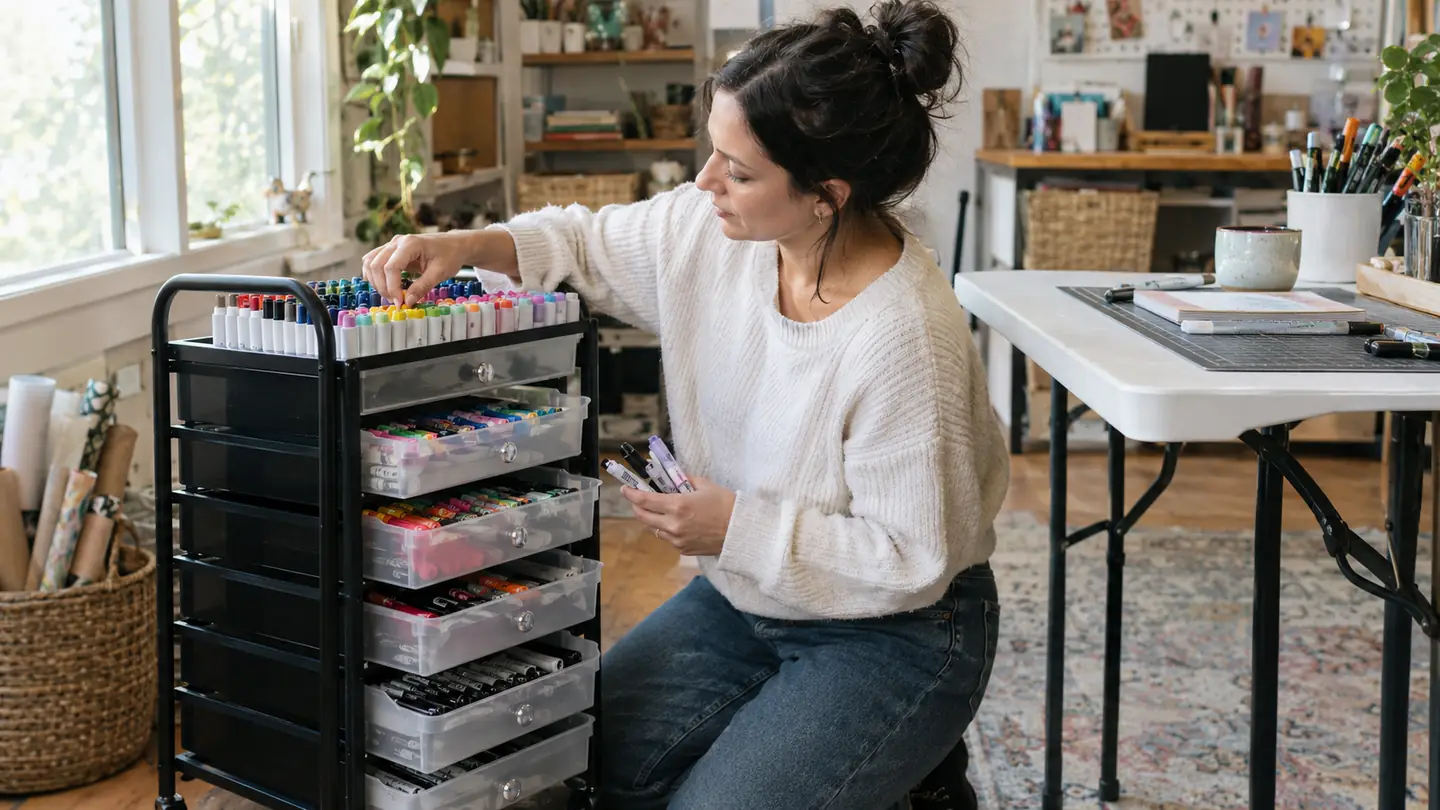
I am 58, I retired from teaching middle school art a few years ago, and I turned the spare bedroom into a craft room. There is one long folding table under the window, a rolling cart of drawers beside it, and a chair that has seen better days. That is where I have spent a lot of evenings since the Ohuhu set arrived.
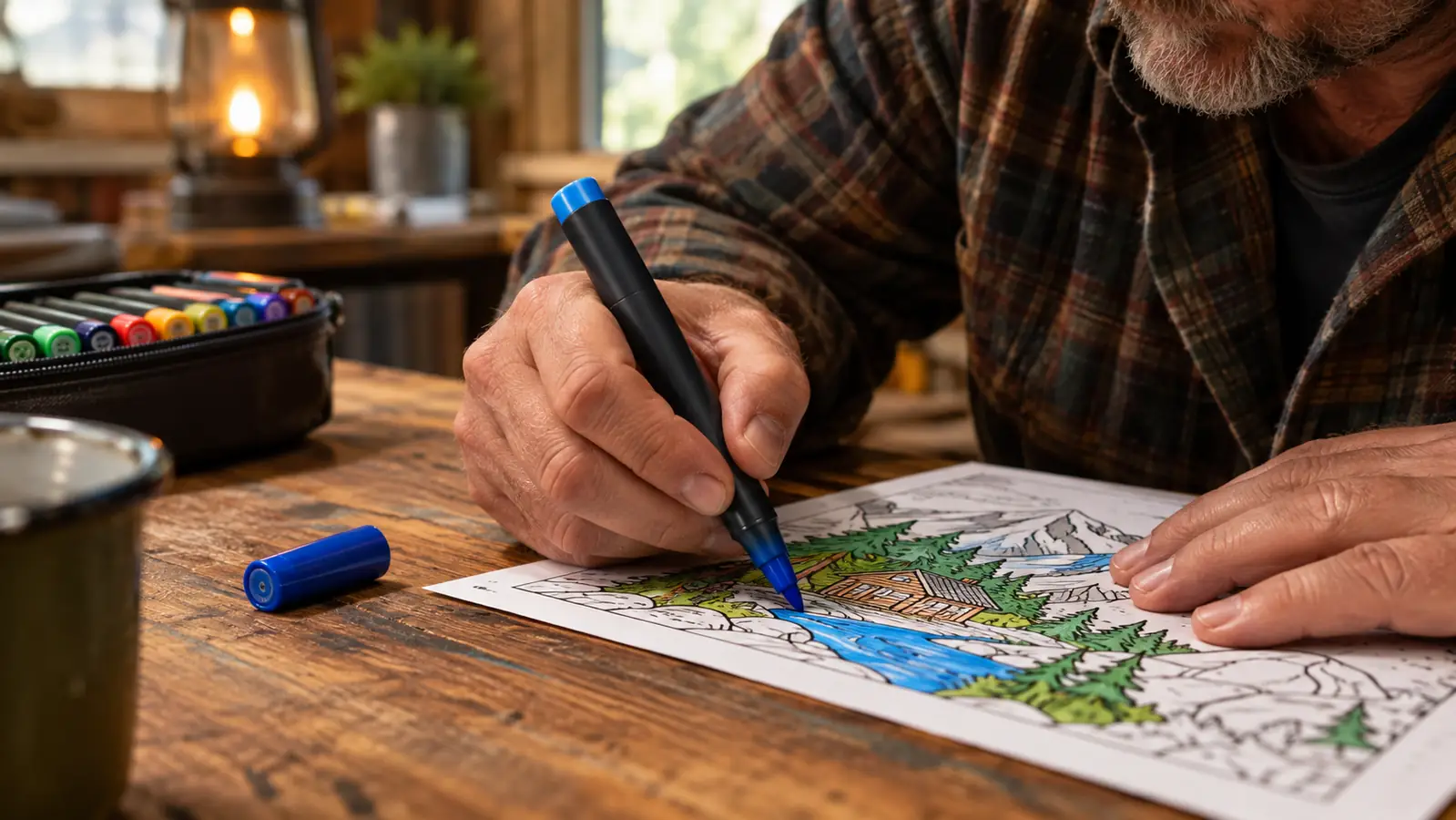
My main use is adult coloring pages, the kind with tiny detailed sections that take forever. I also make cards for birthdays and holidays, and I sketch little scenes for fun. I have mild arthritis in my right thumb, so how a marker feels in my hand matters as much as how it looks on paper. I have used the Ohuhu set for coloring pages, card backgrounds, hand-lettered envelopes, and even a few small paintings on mixed-media paper. I have also left markers uncapped by accident, dropped them on the floor, and loaned them to friends at craft night. They have survived all of it.
A coloring session for me is usually an hour in the evening at the folding table, with a lamp angled from the left so my hand does not cast a shadow on the page. I pull the colors I need into a small cup rather than working from the full case. With 100 markers it is easy to spend more time choosing than coloring, and a small cup of twelve keeps me focused on the page in front of me.
I kept a little notebook during the first month and wrote down what I noticed: which colors blended well, which ones bled through my cheaper paper, and which tips held up. That notebook is the basis for everything I am telling you here.
The notebook taught me which colors I actually use. Out of 100, about thirty do most of the work: a run of greens for leaves, three or four blues for sky and water, a family of warm browns, and a few soft pinks for flowers and skin. The rest come out for special pages. That is normal for any big set, and it is worth knowing so you do not judge the set by colors you rarely touch.
What Makes the Ohuhu Set Different
The Ohuhu set comes with 100 colors, and every marker has two ends: a chisel tip and a fine tip. The chisel tip is the workhorse. It lays down a wide swath of color for backgrounds and large areas, and the corner of the chisel gives you a thinner line when you need it. The fine tip is what I use for details, lettering, and the tiny spaces in coloring pages that seem designed to test my patience.
The ink is alcohol-based, which means it dries fast and blends with other alcohol markers. You can lay down two colors side by side and go back over the seam with a light hand to get a smooth gradient. That is the thing people mean when they talk about blending, and the Ohuhu markers do it well. They are not as effortless as the expensive professional brands, but they are close enough that I stopped noticing the difference by the second week.
Fast drying cuts both ways. It means I can layer a second color on top within seconds and stack a card with no waiting. It also means the edge of a color can dry before you finish a large area, leaving a visible line. The fix is to work in small sections and keep the leading edge wet, moving in small circles rather than long strokes.
The set is also refillable, which matters to me because I hate throwing things away. Ohuhu sells refill bottles for the colors I use most, and the markers pull apart so you can top them up. I have not needed to refill anything yet after months of use, but knowing I can is a comfort.
How the Markers Perform Over Time
The first thing I noticed was how consistent the ink flow is. My old budget markers would start out strong and then get patchy halfway through a section. The Ohuhu markers lay down the same line from the first stroke to the last, even when I am coloring a large background and the marker has been uncapped for a while. That consistency is what makes them feel more expensive than they are.
I tested that on purpose. I picked my most used green and colored the same leaf shape on a scrap of cardstock once a week for three months. The color in the last swatch is the same depth as the first. That consistency is what I care about most, because a marker that fades halfway through a page leaves a patchy result that is impossible to fix.
The tips hold up too. I have colored dozens of pages, and the fine tips still come to a clean point. The chisel tips still have their sharp edge. I have not had a single tip fray or push back into the barrel, which happened to me with cheaper sets within the first few sessions.
The fine tips have kept their point far better than I expected. Only one has softened, and that was my fault for pressing hard on rough watercolor paper. The chisel tips have worn a little rounder at the corners, which actually makes them nicer for filling large areas. I color with a light hand, and that is the single best habit for making any marker tip last.
The caps are the one thing I would change. They are on tight when the markers are new, and I have to use both hands to get some of them off. It gets easier after a few weeks, but if you have weak hands or arthritis, you will notice it. I also wish the color chart printed on the side of each marker were bigger. The little band of color is hard to read when the markers are standing in a cup, and I have grabbed the wrong shade more times than I want to admit.
The Ohuhu markers lay down the same line from the first stroke to the last, even when I am coloring a large background and the marker has been uncapped for a while.
Blending, Paper, and the Colors Themselves
Blending is where alcohol markers live or die, and the Ohuhu set does it well. My usual move is to lay down a dark color, add a lighter color over part of it, then go back with the lighter color and pull it into the dark. The Ohuhu markers let me do that without leaving a harsh line. I have made smooth skies, soft shadows on fruit, and gradients on card backgrounds that look like I knew what I was doing.
Paper matters a lot with these markers. Alcohol ink will bleed through thin printer paper and even through some coloring books. I use a thick cardstock for cards and a dedicated alcohol marker pad for coloring pages, and I put a scrap sheet underneath anything I care about. With the right paper, the markers behave beautifully. With the wrong paper, they will soak through and stain the table. That is not a flaw in the markers, but it is something you should know before you buy.
My go-to is a smooth, bright white cardstock around 80 lb for cards, and a marker pad for practice and coloring pages. On both, the color sits up crisp and the bleed stays under control. On cheap printer paper the ink spreads and feathers. I always tape a scratch sheet underneath, because even good paper lets a little ink through on a dark, heavy layer.
The color range is genuinely useful. There are the usual reds, blues, greens, and yellows, plus a lot of muted tones, pastels, and skin tones that I actually use. A few of the darker colors look almost identical to each other, which is my biggest complaint about the set. I have two dark grays that I cannot tell apart unless I hold them side by side. It is a minor annoyance, not a dealbreaker, but it is real.
The set comes with a printed color chart, and I recommend filling in a blank swatch chart of your own on the paper you actually use. The printed chart is a guide, but your paper and your hand will shift every color slightly. My handmade swatch card lives inside the lid of the case and gets more use than the printed one.
Who This Is For
This set is for the hobbyist who colors, makes cards, or sketches and wants one set that does everything well. It is for the person who is tired of buying cheap markers that dry out, and for the person who has been eyeing the expensive professional brands but cannot justify the cost. It is also for the person who wants a huge range of colors without having to buy six separate sets. If that sounds like you, the Ohuhu set is probably the right call.
It is also a good set for anyone with stiff or sore hands. The barrels are light and wide enough to hold without a tight pinch, and the caps come off without a fight once they have been opened a few times. On days when my thumb is bad, I can still color for an hour with the Ohuhu set, which I cannot say for every pen on my table.
Who Should Skip It
If you are a working illustrator who needs the absolute best blending and the most precise color matching, you will want the professional brands. The Ohuhu markers are excellent for their price, but they are not identical to the premium markers that cost several times as much per barrel. If you only color occasionally and do not care about blending, a smaller set will save you money and drawer space. And if you have very weak hands, the stiff caps might frustrate you enough to look elsewhere.
For everyone else, the question is simpler. If you color, make cards or sketch for the joy of it, the Ohuhu set gives you a full palette that behaves the same way month after month, and that is what a hobby set should do.
What I Liked
- Excellent value for 100 colors
- Smooth, consistent ink flow
- Chisel and fine tips both work well
- Blends beautifully on the right paper
- Refillable, so you can top up favorites
Where It Falls Short
- Caps are stiff when new
- A few colors look almost identical
- Color chart on the barrel is too small
- Bleeds through thin paper
Months in, I would buy the Ohuhu set again tomorrow
If you want a 100-color alcohol marker set that blends, lasts, and does not cost a fortune, this is the one I reach for every day. See the current price on Amazon and decide for yourself.
Amazon Check Today's Price on Amazon →