

If you color or make cards for more than a month, you will eventually hit the Copic question. They are the markers every art teacher I knew in 30 years of teaching pointed to as the gold standard. They are also expensive enough that I put off trying them for a long time. Then I bought a small set of Ohuhu markers on a whim, and suddenly I had two marker families on my table and a very practical question: which one actually fits the way a hobbyist works?
I spent a month using both side by side. I colored the same stamped images twice, once with each set. I made cards, shaded lettering, and filled a few pages of an adult coloring book. I also paid attention to the things that matter to my hands, because I have mild arthritis in my right thumb and a marker that fights me does not stay in my cup. Here is the short answer: Ohuhu is the set I reach for every day, and Copic is the set I reach for when a piece really matters.
| Ohuhu 100-Color Set | Copic Sketch Markers | |
|---|---|---|
| Price per marker | Roughly a dollar a marker for the 100-color set | Several times more per marker, even buying singles |
| Color range | 100 colors in one box, with a numbered chart | Huge range, but you build it one marker at a time |
| Tip options | Chisel and fine tips in every marker | Super brush is the star, with many tip choices |
| Blending | Blends well once you learn the rhythm | The smoothest blends I have ever made |
| Ink refills | Refillable, with refills available | Refillable, with a wide refill system |
| Best for | Hobbyists who want a full palette without a big spend | Artists who want the finest brush control and buy as they go |
Where Ohuhu Wins
The first thing you notice with the Ohuhu 100-color set is that you are not saving up for a color. You open the box and the whole rainbow is there, organized in a numbered chart that actually matches the marker caps. For a hobbyist that is huge. I did not have to remember which single marker I needed to order next. I just pulled the color I wanted and kept going. When I colored the same stamped flower with both sets, the Ohuhu version took me half the time, mostly because I was not walking to my computer to order a missing shade.
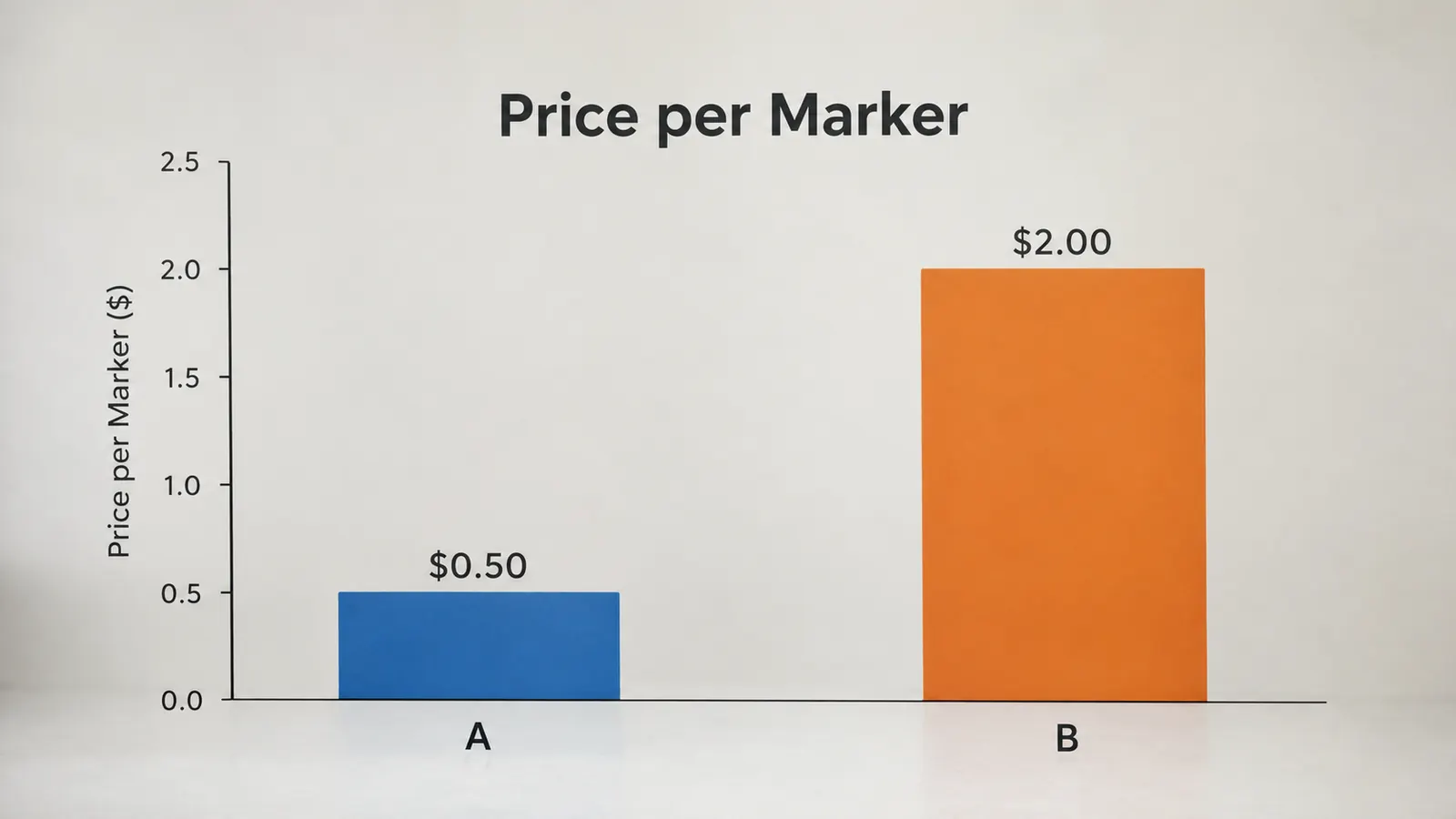
The price per marker matters more than I expected. I am not going to quote numbers here because prices change, but the gap is large enough that I could buy the full 100-color Ohuhu set for less than a small handful of Copic markers. That changes how you practice. I felt free to experiment with the Ohuhu markers, to try a blend that might fail, to color a whole page just to see what happened. With my Copic markers I caught myself hesitating, because every stroke felt like it cost something. For learning and for everyday making, that freedom is the whole ballgame.
The numbered chart deserves a closer look, because it is the reason the set actually works for me. On the first evening, I sorted all 100 markers into the plastic stand that came in the box, then matched each cap to the printed chart. It took about 20 minutes and it was worth every second. When I reached for a color, I knew the number before I pulled the cap, and when I put it back, the chart told me where it lived. My craft table is a long folding table under the window in my spare bedroom, and the stand now sits at the back edge, always within reach. On a busy card-making night I can grab a color without looking up from the paper.
The chisel and fine tips cover more ground than I expected. The chisel end lays down a broad stroke that fills a large area fast, and the fine end handles the edges and the small details. For the kind of work I do, stamped images, hand-lettered sentiments, and the occasional coloring page, that pair of tips is enough. I do not miss a brush tip as often as I thought I would. When I do want a softer edge, I use the chisel tip on its side and it gives me a passable blend. It is not the same as a true brush, but it is close enough for a card that is going in the mail.
The Ohuhu barrels are also easier on my right thumb than I expected. They are a little wider and lighter, with a slightly soft finish that keeps my grip from slipping during a long coloring session. After an hour with the Ohuhu set, my hand felt the way it does after an hour of writing. After an hour with the Copic markers, I needed a break.
Start with the full rainbow, not a single marker
The Ohuhu 100-color set gives you a complete palette for less than the price of a few premium markers. It is the set I reach for every single day.
Amazon Check Today's Price on Amazon →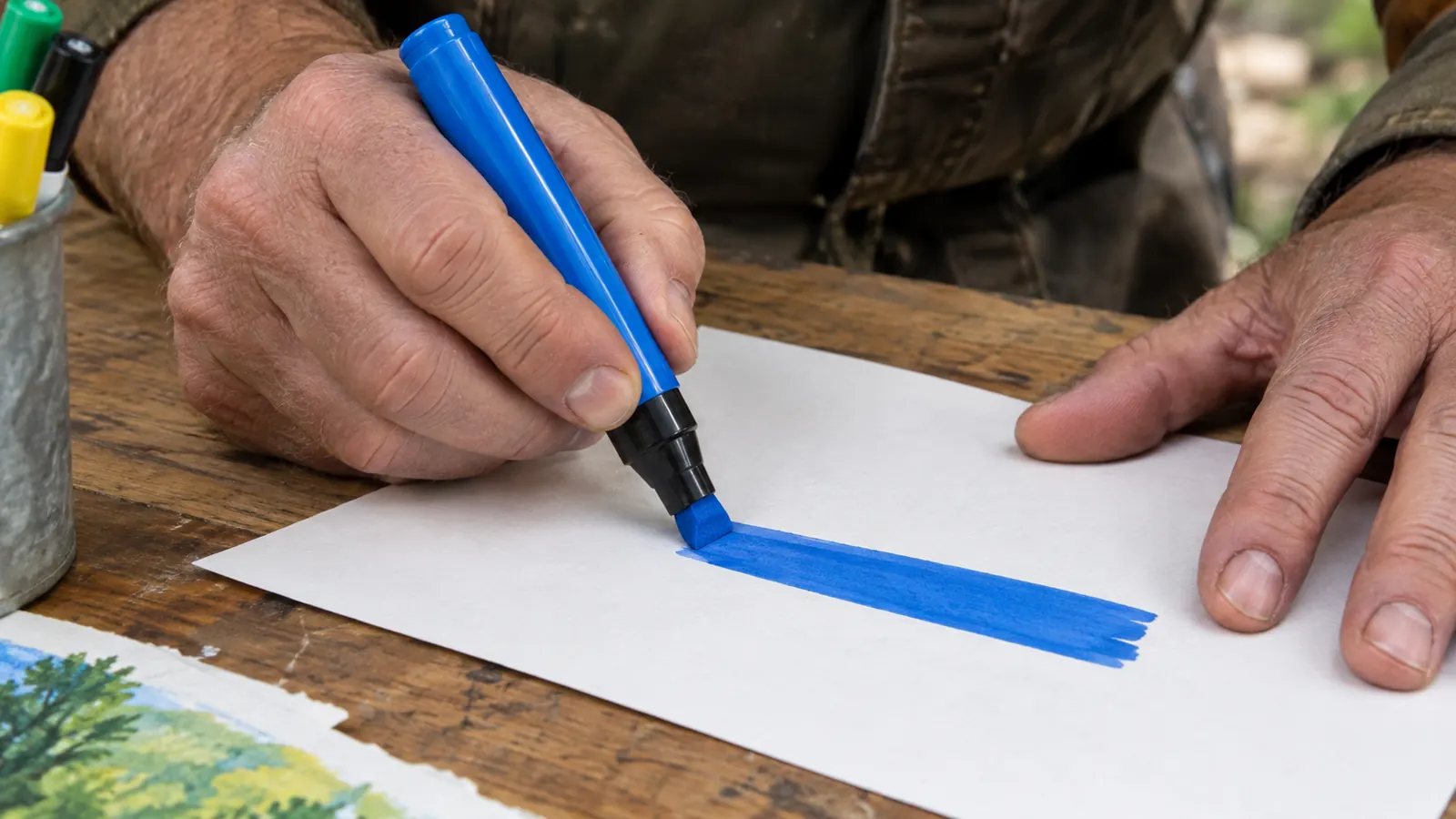
Where Copic Wins
I have to be honest about the blends, because that is the reason Copic has the reputation it does. When I colored the same image with both sets, the Copic version had a smoothness I could not quite match with the Ohuhu markers. The color melted into the paper in a way that felt almost effortless. The super brush tip is also genuinely special. It moves like a paintbrush, and for anyone who draws faces or does fine illustration work, that tip alone can justify the price. My hand arthritis also noticed the difference: the Copic markers are lighter and the brush tip needs almost no pressure, so a long coloring session is easier on my thumb.
The Copic system is built for people who buy as they go. You can buy one marker at a time, test it, and build a collection that is exactly yours. You can also replace the nibs and refill the ink, which means a well-loved marker can last for years. That is a real advantage for a working artist who uses the same five colors every day. For me, though, the system is also the catch. Building a full palette one marker at a time is slow and expensive, and I am a hobbyist who wants to sit down and make something tonight, not assemble a collection over two years.
I want to be specific about the blend test, because it is the closest I came to switching sides. On a Tuesday night in early March, I stamped the same daisy image twice on the same brand of cardstock. I colored the left daisy with Ohuhu markers, using the chisel tip to lay down the base color and the fine tip to pull the edges inward. I colored the right daisy with Copic markers, using the brush tip the way I would use a watercolor brush. The Copic daisy had a softer transition between the pale center and the deeper petal edges. The Ohuhu daisy was perfectly presentable, but the blend line was visible if you looked for it. I set both cards on the windowsill and looked at them again the next morning. The Copic version still looked smoother. The Ohuhu version still looked like a card I would happily mail to my sister.
The difference showed up most in skin tones and skies, the two places where a smooth gradient matters most. With Copic, I could layer three related colors and get a gradient with no visible steps. With the Ohuhu set, I got the same result with one extra pass and a slightly lighter hand. The Ohuhu blend was not worse so much as it took more effort to reach the same place.
The weight difference is real, and it matters to me more than I expected. My Copic markers are noticeably lighter in the hand, and the brush tip glides with almost no pressure. On a long evening of coloring, that means less strain in my right thumb. I noticed it most on the third night of my test, when I colored for about two hours straight. With the Ohuhu markers I had to stop and shake out my hand twice. With the Copic markers I finished the same kind of session without stopping. That is a genuine advantage, and I would not want anyone with hand pain to ignore it. It is also the main reason I keep a small cup of Copic markers on the table even though the Ohuhu set is my everyday workhorse.
Who Should Buy Which
Buy the Ohuhu set if you are a hobbyist, a card maker, a scrapbooker, or anyone who wants a full palette right now. It is the set I keep in the cup on my craft table, and it is the one I hand to friends when they come over for craft night. The colors are rich, the chisel and fine tips cover most jobs, and the price per marker means you can actually use them without guilt. If you are new to alcohol markers, this is the set that lets you learn without a big investment.
One practical tip whichever you choose: test each new marker on the exact paper you plan to use. Alcohol ink behaves differently on cardstock, marker paper and printer paper, and a swatch card for your own paper tells you more than any color chart on the box. I keep a swatch card for my Ohuhu set taped inside the lid.
Buy Copic if you are a working illustrator, a serious sketchbook artist, or someone who knows exactly which five colors you use every day and wants the finest possible control. The brush tip and the blend quality are worth the money to that person. And if you already own a few Copic markers and love them, keep using them. The good news is that the two sets can live side by side. I use my Copic markers for the focal image on a card and the Ohuhu markers for everything else, and they play together beautifully.
If you are unsure, start with the Ohuhu set and see how far it takes you. If after a year you find yourself wishing for smoother blends on every page, you will know exactly which few Copic colors to add, and the Ohuhu markers will still earn a place on the table for backgrounds and large areas.
There is one more thing I want to say about the Ohuhu set, and it is the reason I keep recommending it to my craft night friends. The set is forgiving. When I first started with alcohol markers, I ruined a few coloring pages by pressing too hard and leaving streaks. The Ohuhu markers let me learn that lesson without wasting expensive ink. The chisel tip is easy to control, the fine tip does not skip, and the ink lays down evenly even when my hand is tired. For a beginner, that forgiveness is worth more than the finest brush tip in the world. You can always add a few Copic markers later, once you know which colors you actually use. That is exactly what I did, and it is the best of both worlds.
The set that lives on my table every day
For the way most hobbyists actually craft, the Ohuhu 100-color set is the practical choice. Full palette, refillable markers, and a price that lets you make mistakes.
Amazon Check Today's Price on Amazon →