
I have a confession. I bought the shynek jewelry making kit mostly because the price was right and the box said 1857 pieces, which sounded like a lot of craft night potential. I did not expect it to become the thing I reach for every single week. But here we are, months later, with a drawer full of earrings I actually wear and a repair pile that finally stopped growing.
If you are new to jewelry making, or you are tired of buying findings one little bag at a time, this review is for you. I am Paula, I am 58, I have mild arthritis in my right thumb, and I have been making things with my hands for most of my life. I tested this kit the way I test everything in my craft room: slowly, honestly, and with a running list of what annoys me.
The Quick Verdict
The shynek jewelry making kit is the best all-in-one starter set I have used. The tools are genuinely usable, the findings are organized, and the variety is enough to keep a hobbyist busy for a year. It is not professional-grade, and a few pieces are thinner than I would like, but for the price it is an easy recommendation.
Amazon Check Today's Price →Start with a kit that actually has everything
The shynek 1857-piece kit covers findings, wires, chains, and tools in one box. No more running to the craft store for one missing pack of earring hooks.
Amazon Check Today's Price on Amazon →How I've Used It
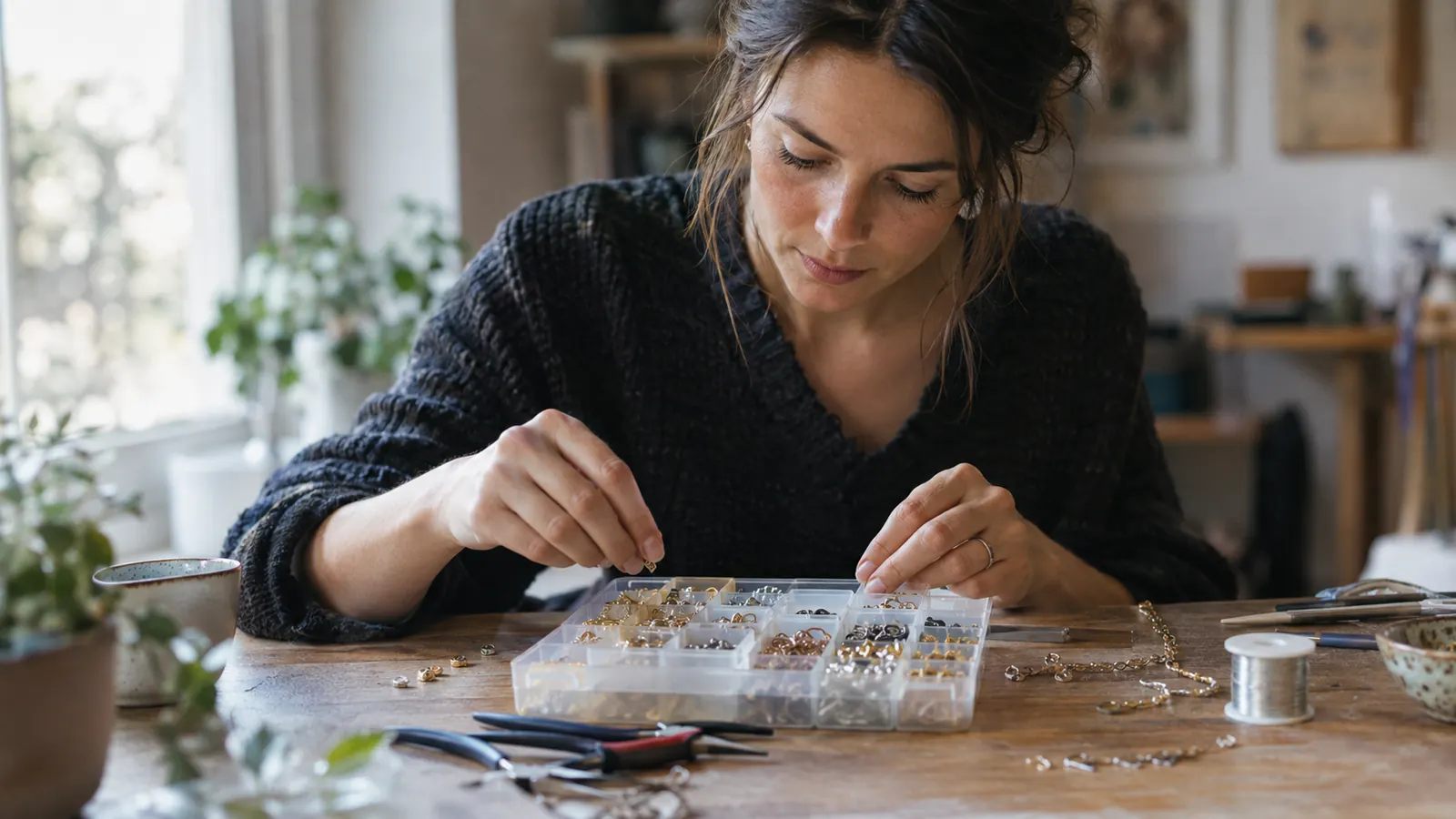
I have used this kit for about four months, at least two or three evenings a week. My craft room is the spare bedroom with a long folding table under the window, and the shynek kit lives in a rolling cart of drawers beside it. That matters, because a kit that is annoying to put away does not get used. This one stays out, and it stays organized.
Most evenings I work at the end of the folding table nearest the window, with a felt bead mat spread out so nothing rolls off. I open only the compartments I need for that project and close the rest. The shynek kit has so many small parts that leaving every lid open is an invitation to spill a whole tray of jump rings into the carpet, which I did exactly once.
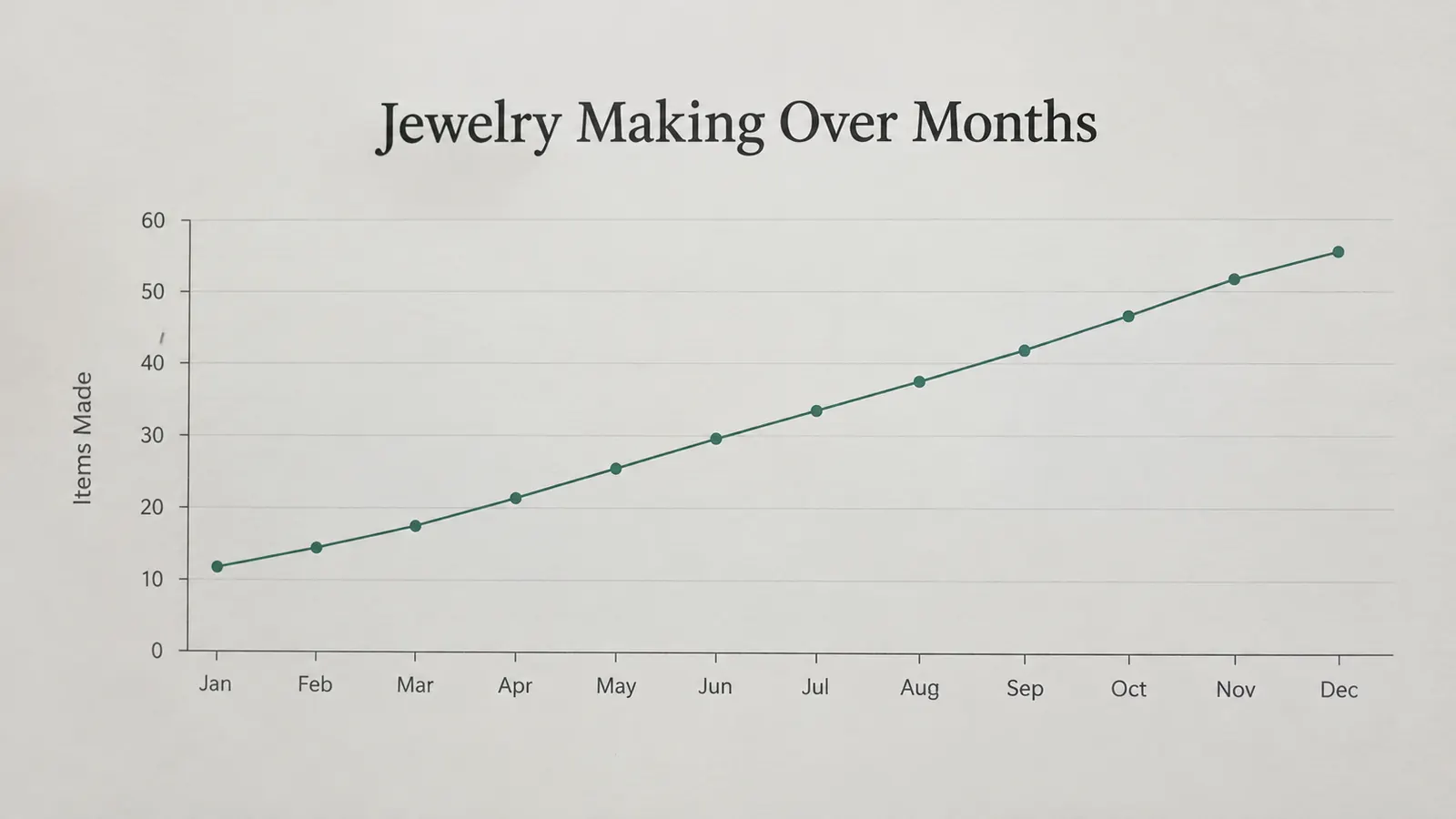
My projects have been mostly earrings, because they are quick and satisfying. I have made at least thirty pairs. I have also made a few bracelets, repaired a broken necklace for a friend, and restring a set of beads that had been sitting in a drawer for years. The kit handled all of it.
A pair of simple drop earrings takes me about twenty minutes: two head pins, a few beads, a wrapped loop at the top and an ear wire. Bracelets take longer, and a wire wrapped pendant can take an evening. The kit covers all three without a trip to the craft store, which is the main reason it has stayed on my table rather than in a closet.
The arthritis in my right thumb is the reason I pay attention to tool ergonomics. The pliers in this kit are comfortable enough for a full evening of work. They are not the softest grips I have ever used, but they are far better than the cheap metal tools I started with years ago.
Jump rings are where hand strength shows up. You open them by twisting sideways with two pairs of pliers, never by pulling them apart. With the shynek pliers, that twist takes a light grip, and the jaws hold the ring without slipping. On a bad day I can still open and close a dozen jump rings before my thumb complains, which is more than I could manage with my old pliers.
What's Actually in the Box
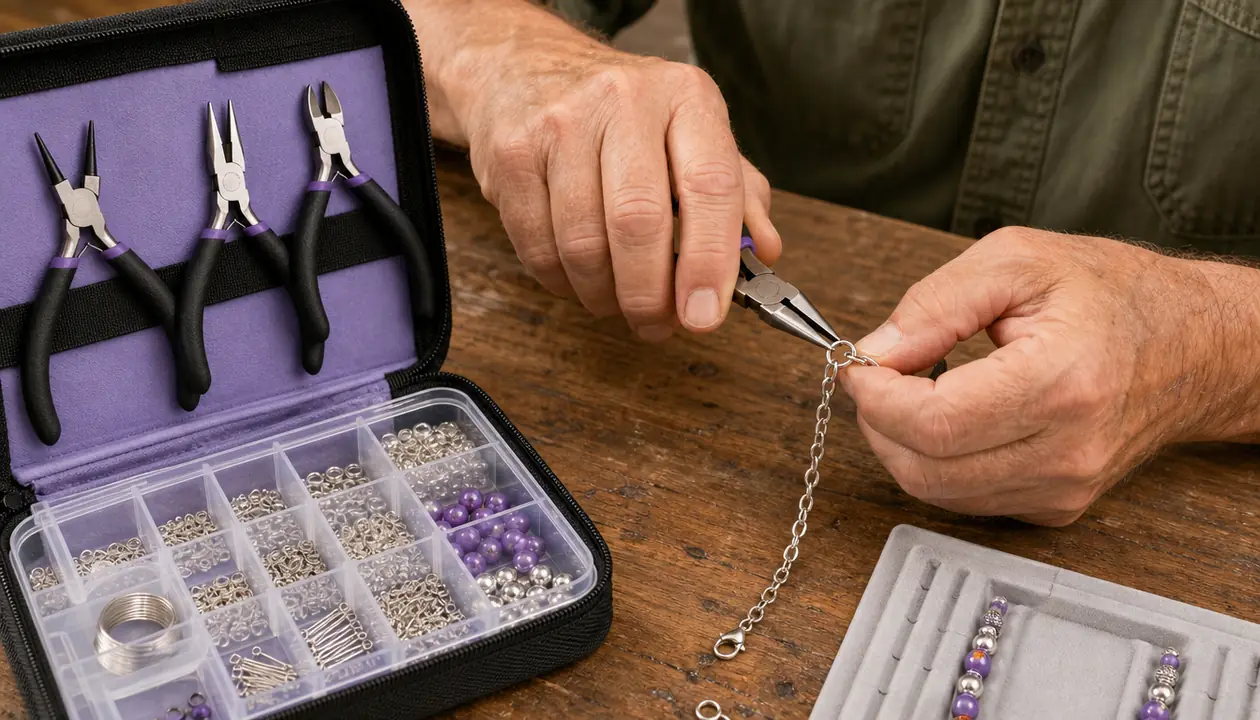
The shynek kit comes with 1857 pieces, which sounds like a marketing number until you open it. The findings are sorted into a compartment tray, and the tray is the kind of thing you will keep using long after the kit is gone. Earring hooks, jump rings, head pins, eye pins, crimp beads, clasps, and spacer beads are all there in quantities that make sense for actual projects.
Most of those pieces are findings, the small metal parts that hold jewelry together: jump rings in several sizes, lobster clasps, ear wires, head pins, eye pins, crimp beads and end caps. That is exactly where a starter kit should be generous, because findings are what run out first. A craft store sells them in tiny packets, and I used to buy three or four packets for every project.
The tools are the part that surprised me. You get a set of pliers that includes round nose, chain nose, and flat nose, plus wire cutters. The cutters are sharp enough to trim head pins cleanly, which is the test I use for every jewelry tool I own. The pliers open and close smoothly, and the joints have not loosened after months of use.
You get round nose pliers for making loops, chain nose pliers for gripping and bending, and wire cutters for trimming. The round nose pair is the one I use most. Its tapered jaws let me make small loops for earrings and larger loops for pendants by sliding the wire to a different point along the jaw. I mark my favorite spot with a dot of nail polish so every loop on a pair of earrings comes out the same size.
There is also a helping hands tool with alligator clips, which I was skeptical about. It turns out to be perfect for holding a jump ring while you open it, or for holding a clasp while you attach it. I use it more than I expected, especially on evenings when my thumb is tired.
The wire and chain assortment is where the kit earns its keep. You get multiple gauges of wire, which means you can do both delicate work and sturdier structural pieces. The chains are fine for basic projects, though I would not use them for anything that needs to hold serious weight.
How It Performs Over Time
The honest test of any craft kit is whether it still works after the novelty wears off. I am happy to report that the shynek kit has held up. The pliers still cut cleanly, the compartment tray still closes, and the findings have not tarnished or bent in ways that made them unusable.
Four months in, the hinges on the pliers are still smooth and the cutters still close cleanly, though I keep them away from memory wire and steel, which can nick the edge of any light hobby cutter. The organizer tray has held up too. The compartment walls are snug enough that small beads do not migrate from one section to the next when I carry the case to craft night.
I have noticed a few things after months of use. The earring hooks are on the thinner side, which is fine for lightweight beads but not ideal for heavy charms. The jump rings are easy to open, which is good for beginners, but they are not the strongest I have used. For everyday earrings and bracelets, they are perfectly adequate.
The wire is the most pleasant surprise. It bends without work-hardening too quickly, which means I can make a loop, undo it, and make it again without the wire snapping. That is the difference between a frustrating evening and a productive one.
I use the thinner wire for wrapped loops and the thicker gauge for ear wires and simple bangles. Both bend smoothly and hold their shape. The wire does mark if you grip it too hard with plain steel pliers, so I wrap my chain nose jaws in a little painter's tape when I want a finish with no tool marks.
The pliers still cut cleanly, the tray still closes, and the findings have not tarnished after months of regular use. That is the real test of a craft kit.
Who This Is For
This kit is for the person who wants to make jewelry without building a collection of tools and findings one trip at a time. It is for the beginner who is tired of watching tutorials with a pile of mismatched supplies. It is also for the hobbyist who wants a single box that can handle earrings, bracelets, and simple repairs.
If you are a complete beginner, this is the kit I would hand you. The tools are forgiving, the findings are organized, and the included instructions are enough to get you started. You will not need to buy anything else for your first several projects.
Start with simple loops on head pins before anything else. Make twenty of them on scrap wire until they come out round and centered. Every earring, charm and pendant depends on that one skill, and the shynek kit gives you enough head pins and wire to practice without worrying about wasting supplies.
Who Should Skip It
If you are a professional jeweler, or you make jewelry every single day for a living, this kit is not for you. The tools are good, but they are not professional-grade. The findings are fine for hobby projects, but they are not the quality you would want for pieces you sell.
I would also skip this if you already have a well-stocked jewelry bench. The value of the shynek kit is in the variety and the organization. If you already own a good set of pliers and a drawer full of findings, you are paying for things you already have.
The Tradeoffs Nobody Mentions
Here is what I wish someone had told me before I bought it. The compartment tray is great, but it is not airtight. If you knock it over, you will be picking up tiny beads from the floor. I learned this the hard way, and I now keep the tray flat on the table at all times.
The biggest adjustment is sorting. Some compartments hold two similar sizes of jump ring, and in dim light they look identical. I spent one evening relabeling the tray with small stickers and a fine marker, and it has saved me far more than an evening since. Do it on day one, before you start mixing pieces back into the wrong slots.
The other tradeoff is the sheer number of pieces. 1857 pieces is a lot, and not all of them are things you will use. I have a small pile of spacer beads that I have never touched. That is not a flaw, exactly, but it is worth knowing that the number is impressive more than it is practical.
What I Liked
- Tools are genuinely usable, with comfortable grips and sharp cutters
- Findings are sorted into a compartment tray that keeps everything organized
- Enough variety for earrings, bracelets, and simple repairs
- Wire bends without snapping, even when you redo a loop
- Great value for a beginner who needs everything in one box
Where It Falls Short
- Earring hooks are on the thinner side for heavy charms
- Compartment tray is not airtight, so it needs to stay flat
- Not professional-grade, despite the large piece count
- Some pieces in the 1857 count are filler you may never use
How It Compares to What I Used Before
Before this kit, I was using a random collection of tools I had accumulated over years. A pair of pliers from a hardware store, a bag of earring hooks from a craft fair, wire that I bought one spool at a time. The shynek kit replaced all of that with a single organized box.
The difference is not that the shynek tools are dramatically better than what I had. The difference is that everything is in one place, and everything works together. When I sit down to make earrings, I do not spend twenty minutes looking for a pair of pliers. I just open the tray and start.
The difference is having everything in one place, matched to the job. Before, I would start a pair of earrings, discover I was out of ear wires, and put the project aside for a week. With the shynek kit on the rolling cart, a project that starts on a Tuesday evening is finished the same night, and that is what keeps a hobby going.
Final Verdict
The shynek jewelry making kit is the best all-in-one starter set I have used, and I have been making jewelry for years. It is not perfect. The findings are not professional-grade, and the tray needs to stay flat. But for a hobbyist who wants to make earrings, bracelets, and repairs without building a collection one trip at a time, it is an easy recommendation.
If you are on the fence, I would say this: the shynek kit is the kind of purchase that pays for itself in saved trips to the craft store. The tools will last, the findings will get used, and you will actually make things. That is more than I can say for most craft supplies I have bought.
Give your craft nights a real starting point
The shynek 1857-piece kit has the tools, findings, and organization to get you making jewelry tonight. See today's price on Amazon and decide for yourself.
Amazon Check Today's Price on Amazon →