

If you have ever stood in the craft aisle trying to decide between two kits that look identical from the outside, you know the feeling. Both boxes promise everything. Both have a photo of shiny finished earrings on the front. And both will sit on your table for a week while you wonder if you made the right call. I have been there more times than I can count, so when I finally put the shynek Jewelry Making Kit next to the PAXCOO kit on my own folding table, I took notes like I used to grade art projects.
My first impressions of each box were very different. The shynek case opened onto rows of neatly divided compartments, each holding one type of finding, with the tools tucked in a separate section. The PAXCOO case was smaller and simpler, with fewer compartments and the tools in a pouch. Neither first impression told the whole story, which is why I made the same pieces with both before deciding anything.
The first project I made with each kit was a pair of simple drop earrings: two head pins, three beads each, a wrapped loop and an ear wire. With the shynek kit, every part came from the tray in front of me. With the PAXCOO kit, I found everything too, but the ear wires came in one size only, and I would have liked a second style. It was a small thing, and it hinted at the main difference between the two boxes: breadth of supplies.
I bought both kits so I could make the same pieces from each and see the differences at the table rather than on a product page. Over a few weeks I made earrings, beaded bracelets and simple charm necklaces from each kit, at the same folding table, under the same lamp. I am a hobbyist, not a professional jeweler, so this is a test of what a hobbyist will feel, not a lab report.
The short answer is that the shynek kit fits most hobbyists better, especially if you are just building a stash of findings and tools that will actually get used. But the PAXCOO kit wins a few honest battles, and depending on what you make, it might be the better box for you. Here is the full breakdown.
Both kits aim at the same person: someone starting out, or coming back to the hobby, who wants one box of findings and tools instead of a dozen tiny packets. Both include pliers, wire, findings and a storage case. The differences are in how many parts you get, how they are sorted, and how the tools feel in a tired hand.
Here is how I judged them, so you can weigh my results against your own priorities. I looked at how complete the findings were, how the tools felt after a long session, how well the storage held up when carried, and how easy it was to find the right part in a hurry. I did not judge the beads themselves very heavily, because most crafters end up buying beads they love separately and use a kit for the findings and tools.
| shynek Jewelry Making Kit | PAXCOO kit | |
|---|---|---|
| Parts count | 1,857 pieces, heavy on findings you will actually use | Around 1,000 pieces, with a similar mix of beads and findings |
| Tools included | Pliers, wire cutters, and a helping hands stand | Basic pliers and a small storage case |
| Storage | Divided organizer trays that survive being opened and closed | A compact case that works but feels tighter once you spread things out |
| Ease of use for arthritic hands | Pliers have a comfortable grip and light action | Pliers work fine but feel stiffer on the spring |
| Best for | Beginners and hobbyists who want one box that covers earrings, bracelets, and repairs | Crafters who mostly make simple earrings and want a smaller footprint |
Where shynek Wins
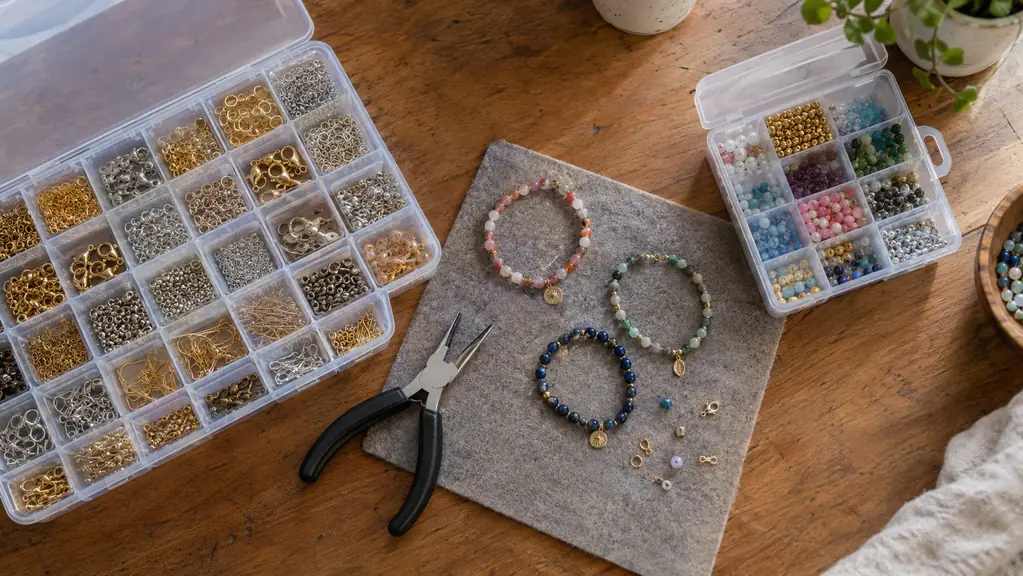
The first thing I noticed was the tray. I know that sounds like a small thing, but anyone who has dumped a thousand tiny earring hooks onto a table knows it is not. The shynek kit comes in divided organizer trays, and those trays have held up through months of craft nights, drawer shuffling, and one unfortunate incident where I knocked the whole box off the table. The PAXCOO kit uses a compact case that is fine, but it feels tighter once you actually spread the pieces out to work.
With the shynek kit, every type of finding has its own compartment, and the lids close firmly enough that I can carry the whole case to craft night without a single jump ring escaping. When I sit down to make a pair of earrings, I can see the ear wires, head pins and jump rings at a glance and pick up exactly what I need. That saves me five minutes of hunting at the start of every session, and over a month that adds up to an extra project.
The tools matter more than I expected. My right thumb has mild arthritis, so I notice when a pair of pliers has a stiff spring or a handle that digs in. The shynek pliers have a comfortable grip and a light action, which meant I could string and crimp for an hour without stopping to shake out my hand. The PAXCOO pliers work, but they feel stiffer on the spring, and after a long session I could feel the difference. For a younger crafter or someone without hand issues, this might not matter at all. For me, it was the difference between finishing a project and putting it aside.
The shynek wire cutters also closed cleanly on beading wire and head pins, leaving a flush end that did not scratch. I tested that by trimming the tails on ten crimped bracelets. Every end sat flat against the crimp cover. A rough cut end is the most common reason a homemade bracelet snags on a sweater, so this is a small detail that matters when someone wears the piece.
Storage was the third test. I carried each case to my monthly craft night and back four times, on the car seat and then in a tote bag. The shynek case arrived each time with every compartment still sorted. The PAXCOO case held up well too, though a few seed beads worked their way under one divider on the second trip. Neither result was a disaster, but the shynek tray is the one I trust in a bag.
The test that showed it most clearly was a run of twenty simple wrapped loops with each kit's round nose pliers. With the shynek pliers, my loops stayed consistent from the first to the twentieth, and my thumb was fine at the end. With the PAXCOO pliers, the spring was a little stiffer, and by loop fifteen I was setting the pliers down to rest my hand. Both pairs made usable loops. The difference was in how I felt doing it.
Start with the kit that covers the most ground
If you want one box that handles earrings, bracelets, and repairs without a second trip to the craft store, the shynek Jewelry Making Kit is the one I keep reaching for.
Amazon Check Today's Price on Amazon →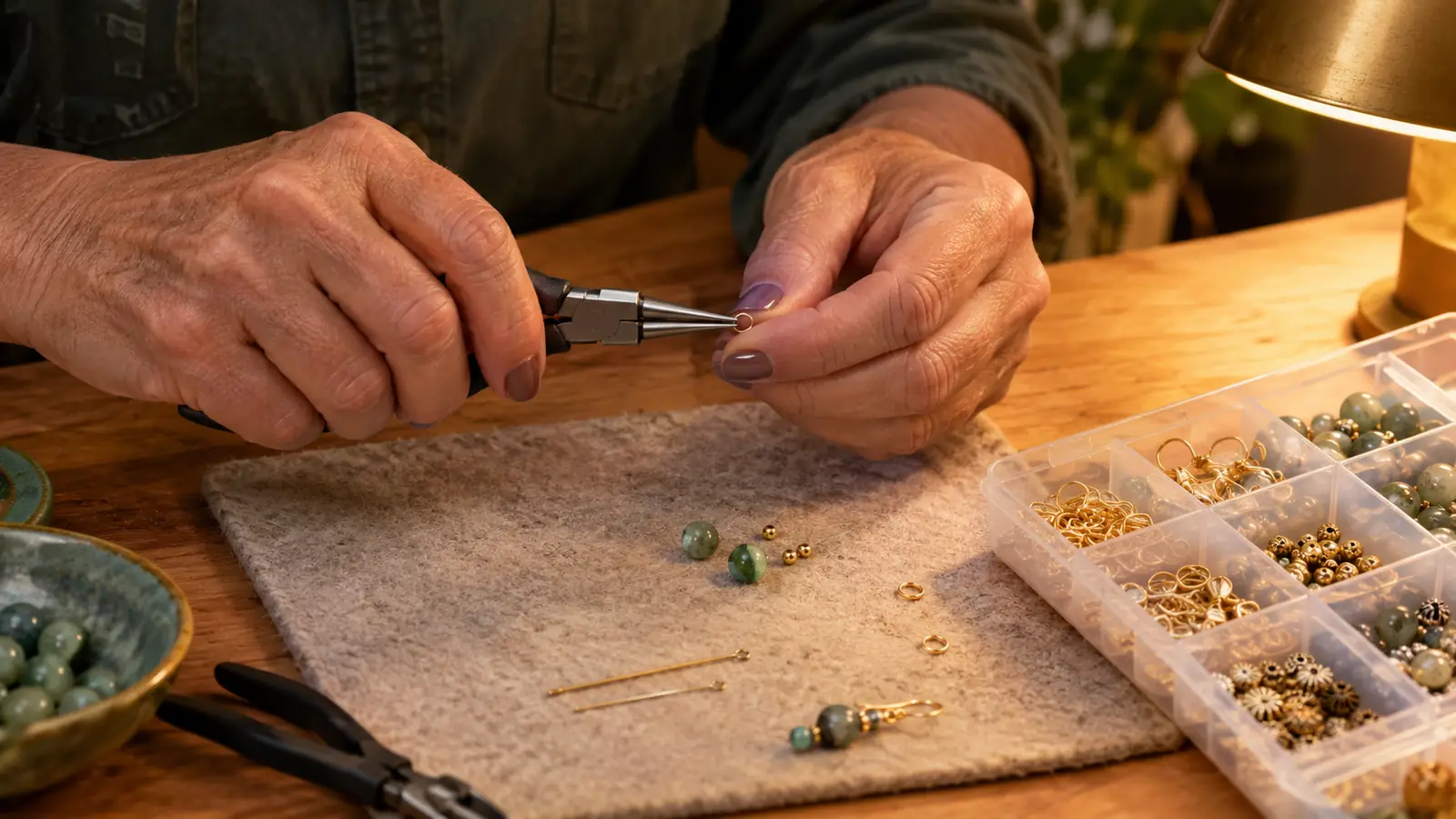
Where PAXCOO Wins
I will be honest: the PAXCOO kit has a smaller footprint, and that is a real advantage if your craft space is a corner of the kitchen table. The compact case slides into a drawer, which the shynek trays do not. If you are the kind of person who packs your hobby away between sessions, PAXCOO is easier to tuck out of sight.
If your craft space is a corner of a kitchen counter or a shelf in a closet, that matters. The PAXCOO case is compact enough to slide into a drawer, and it carries a sensible starter mix of beads and findings. If you only plan to make a few gifts a year, that might be all the kit you need.
PAXCOO also wins on simplicity for absolute beginners who only want to make a few pairs of earrings. The smaller mix means fewer decisions. You open the case, you see a manageable number of hooks and beads, and you get to work. The shynek kit can feel like a lot at first, especially if you are not sure what half the findings are for. That is not a flaw, but it is a real difference in how the two boxes feel on day one.
There is also less to sort. With fewer compartments and fewer sizes of each finding, a brand new crafter is less likely to mix up two nearly identical jump rings. The shynek kit asks you to spend an evening learning where everything lives. The PAXCOO kit asks less of you up front, and for some people that is the deciding factor.
Where the PAXCOO kit falls behind is depth. Once I had made a few batches of earrings and bracelets, I ran low on lobster clasps and crimp beads in the PAXCOO box, while the shynek box still had plenty of both. If you make gifts in batches, for a holiday or a craft fair table, you will feel that difference quickly.
The shynek kit is the one I keep reaching for, but the PAXCOO kit is the one I would hand to a friend who only wants to make earrings on a Tuesday night.
Who Should Buy Which
Buy the shynek Jewelry Making Kit if you want one box that covers a lot of ground: earrings, bracelets, necklaces, repairs, and the occasional gift project. It is the better value for the money if you are going to make jewelry more than once a month, and the tools are comfortable enough for hands that get tired. It is also the better choice if you like to spread out and leave your supplies on the table between sessions.
It is the better pick for anyone who expects to stick with the hobby. The larger supply of findings means you will not run out of ear wires or clasps halfway through a batch of gifts, and the organized tray means the kit stays usable as your collection of beads grows. For me, that combination is what turned jewelry making from an occasional project into a regular evening habit.
For my own table, the decision came down to one evening. I set out to make six matching bracelets for the women at craft night. With the shynek kit I finished all six in one sitting without running short of anything. That evening is the reason the shynek box lives on my rolling cart and the PAXCOO box went to a friend who was just starting out, which suits it perfectly.
Buy the PAXCOO kit if your craft space is tiny, if you mostly make simple earrings, or if you want a smaller, more portable box you can tuck into a drawer. It is a perfectly good kit. It just does less, and for some people that is exactly the point.
One more practical note on care. Whichever kit you buy, wipe the pliers with a soft cloth after each session and store them closed. Moisture and bead dust are what dull the edges and stiffen the hinges over time. A minute of care keeps any pair of hobby pliers working smoothly for far longer.
Whichever you choose, add two inexpensive things: a felt bead mat, so nothing rolls off the table, and a small task lamp, because findings are tiny and good light makes every step easier. Neither kit includes those, and both make a bigger difference to your first projects than the choice of kit itself.
Give your craft table the kit that does the most
The shynek Jewelry Making Kit is the one I keep on my table. Check today's price on Amazon and see if it fits your craft space.
Amazon Check Today's Price on Amazon →