

I have a confession. I bought the shynek jewelry making kit because of the number 1857. That is a very specific number, and my brain read it as a promise: everything you could possibly need, counted out and accounted for. I am 58, I taught middle school art for three decades, and I have opened a lot of craft kits in my life. Some of them lied. So when the box arrived at my door in Longmont, I did what I always do. I dumped the whole thing onto my folding craft table and counted.
This is the honest review I wish someone had written before I spent my own money. Not a list of features from the product page, not a photo of neatly arranged findings that took an hour to stage. Just a straight answer about what the shynek kit is, what it is not, and who should actually buy it.
The Quick Verdict
The shynek kit is the best value I have found for a beginner who wants to make earrings and simple bracelets immediately, as long as you know the pliers are basic and the storage is on you.
Amazon Check Today's Price →Want the full 1857-piece shynek kit without the guesswork?
I opened this kit at my craft table on a Tuesday night and finished a pair of earrings before the kettle boiled. If that is the kind of night you want, this is the kit to start with. See today's price on Amazon and check the current listing for yourself.
Amazon Check Today's Price on Amazon →How I've Used It
I have been making jewelry with the shynek kit for about a month. My craft room is the spare bedroom, with one long folding table under the window and a rolling cart of drawers beside it. I work there most evenings after dinner, usually for an hour or two, and I have mild arthritis in my right thumb, so grip and weight matter to me more than they might to someone younger.
In that month I made twelve pairs of earrings, three bracelets, two necklaces, and one very crooked chain that I wore anyway because my friend Carol said it looked intentional. I used the kit's pliers, wire, jump rings, earring hooks, and beads. I also used my own tools when the kit's tools frustrated me, and I will be honest about exactly when that happened.
The craft table is a six foot folding table I bought years ago, with a gooseneck lamp clamped to one edge and a power strip underneath. My rolling cart holds my own tools and my good pliers, so they are close when I need them. The shynek kit lives on the table in its original box, bags opened and sorted into a twenty-four compartment organizer I bought at a dollar store. That organizer is the single thing that made the kit usable for me.
On the first night I opened the kit, I sat down right after dinner and sorted. It took me about forty-five minutes to put every bag into a drawer or tray. I found extra earring hooks I did not expect, a few extra clasps, and enough head pins that I stopped counting. That first sorting hour is the part nobody photographs, but it is the part that decides whether the kit gets used or gets put in a closet.
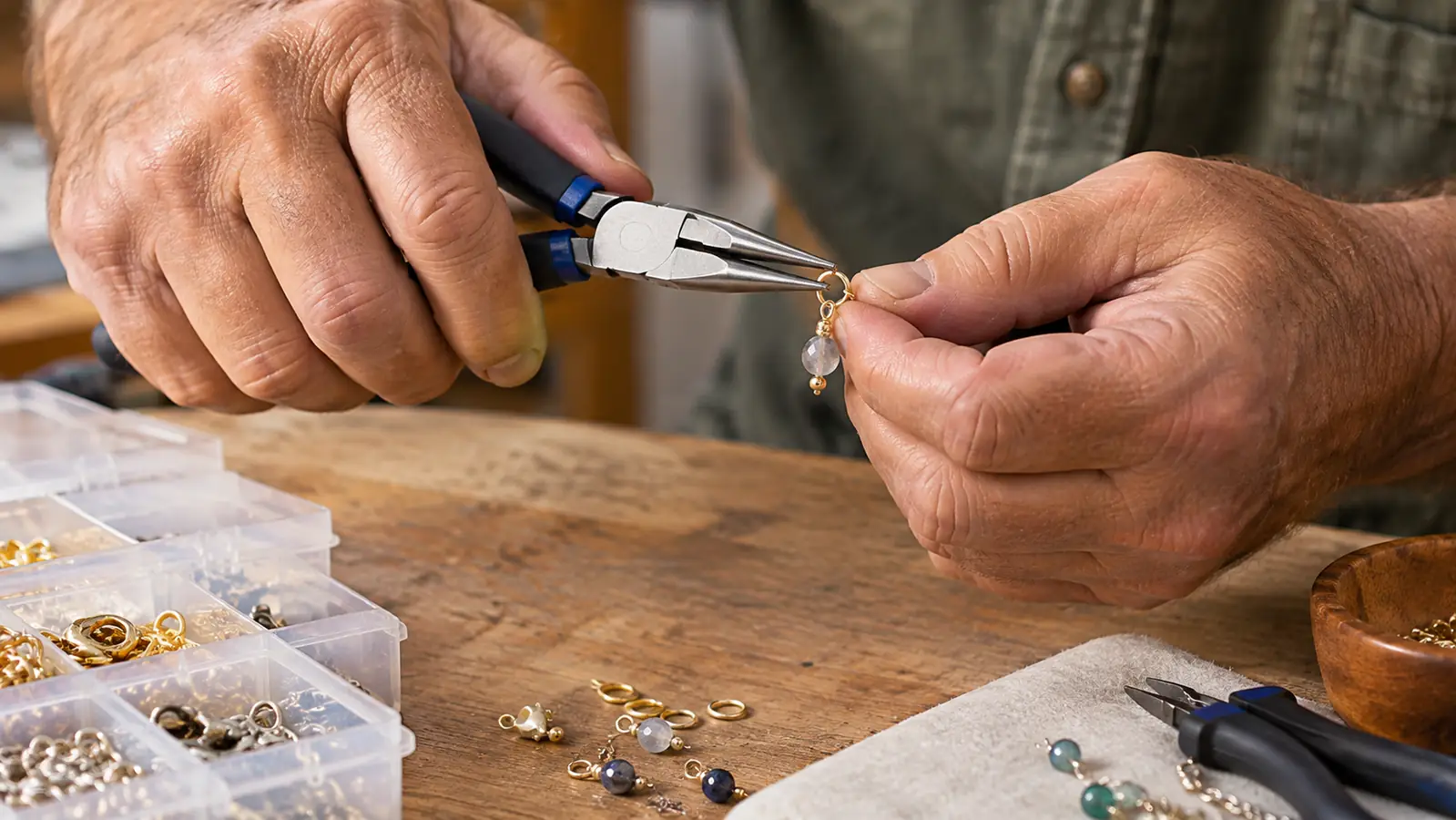
The best surprise of the first week was the little pair of round nose pliers. I expected them to be decorative, the way some kit tools are. They are not. They have a real taper and enough spring to open and close without fighting. I made a set of four earrings in one sitting, which is faster than I can do with my old tool set. That was the moment I stopped treating the kit as a beginner throwaway and started treating it as my everyday box.
What Nobody Tells You About the Count
Here is the thing nobody puts in the product photos. The 1857 pieces include a lot of items that are not beads. The count includes jump rings, head pins, eye pins, earring hooks, earring backs, clasps, crimp beads, and wire. That is not a trick. It is actually the reason the kit is useful. But if you are expecting 1857 beads, you will be disappointed. If you are expecting a complete set of findings so you can actually finish projects, you will be delighted.
I counted the bead bags on my first night, mostly to prove to myself the number was honest. There are far more beads than I will use in a year, and they are a mix of glass, acrylic, and metal spacer beads. The shapes are the usual craft store shapes: rounds, bicones, tubes, and a handful of charms. Nothing high end, but nothing ugly either. The beads are perfectly fine for everyday jewelry and for gifts.
The findings are where the kit earns its keep. Jump rings in several sizes, head pins, eye pins, earring hooks, and clasps. These are the small parts that stop a beginner cold. You cannot finish a pair of earrings without earring hooks, and the kit has plenty. You cannot finish a bracelet without a clasp, and the kit has those too. That is the real value of the 1857 count.
That does not mean the count is misleading. The product listing says pieces, not beads. I checked the small print before I complained. What it means is that the kit is a supply drawer, not just a bead collection. Once you understand that, the count makes sense. It is the difference between a kit that sits in a closet and a kit that becomes your go to box.
One more note about what is not in the box. There are no bead boards or stringing mats, no glue, and no chain nose pliers with a cutter built in. You may already have those things, and if you do, great. If you are giving this as a first kit, add a bead board and a small bottle of jewelry glue to the gift bag. The kit covers the findings side beautifully, but it assumes you have a flat surface to work on and a way to keep beads from rolling.
The 1857 count is mostly findings, not beads. That is not a trick. It is the reason the kit actually lets you finish projects.
The Tools: Honest Notes on the Pliers
The shynek kit includes a set of basic jewelry tools: round nose pliers, chain nose pliers, flat nose pliers, wire cutters, and a small helping hands stand with clips. For a beginner, these are workable. For someone with arthritis, they are a mixed bag.
The pliers are lightweight, which is good for my thumb. But the handles are not padded, and the joint is not as smooth as on my nicer pair. After an hour of opening and closing jump rings, my hand felt it. I solved this by taking breaks and by using the kit's pliers for the simple jobs and my own cushioned pliers for the repetitive ones. If you already own a good pair of pliers, keep them nearby. The kit's tools are a backup, not a replacement.
The chain nose pliers have a longer jaw than I expected, which is handy for reaching into a tight chain link. The round nose pliers taper to a point that works for making loops on head pins, but it is not fine enough for 26 gauge wire wrapping. The wire cutters are fine for the softer wire in the kit and for head pins. They leave a slight burr on thicker wire, so I switch to my own flush cutters for anything heavier.
The helping hands stand is a small metal frame with two clips and a weighted base. It holds a clasp or a wire end steady while you glue or assemble. I used it for a necklace project and it did exactly what it promised. It is not heavy duty, but it does not need to be. For light craft work, it is genuinely useful and it is the reason I reach for this kit instead of my old one.
What I Made and What Went Wrong
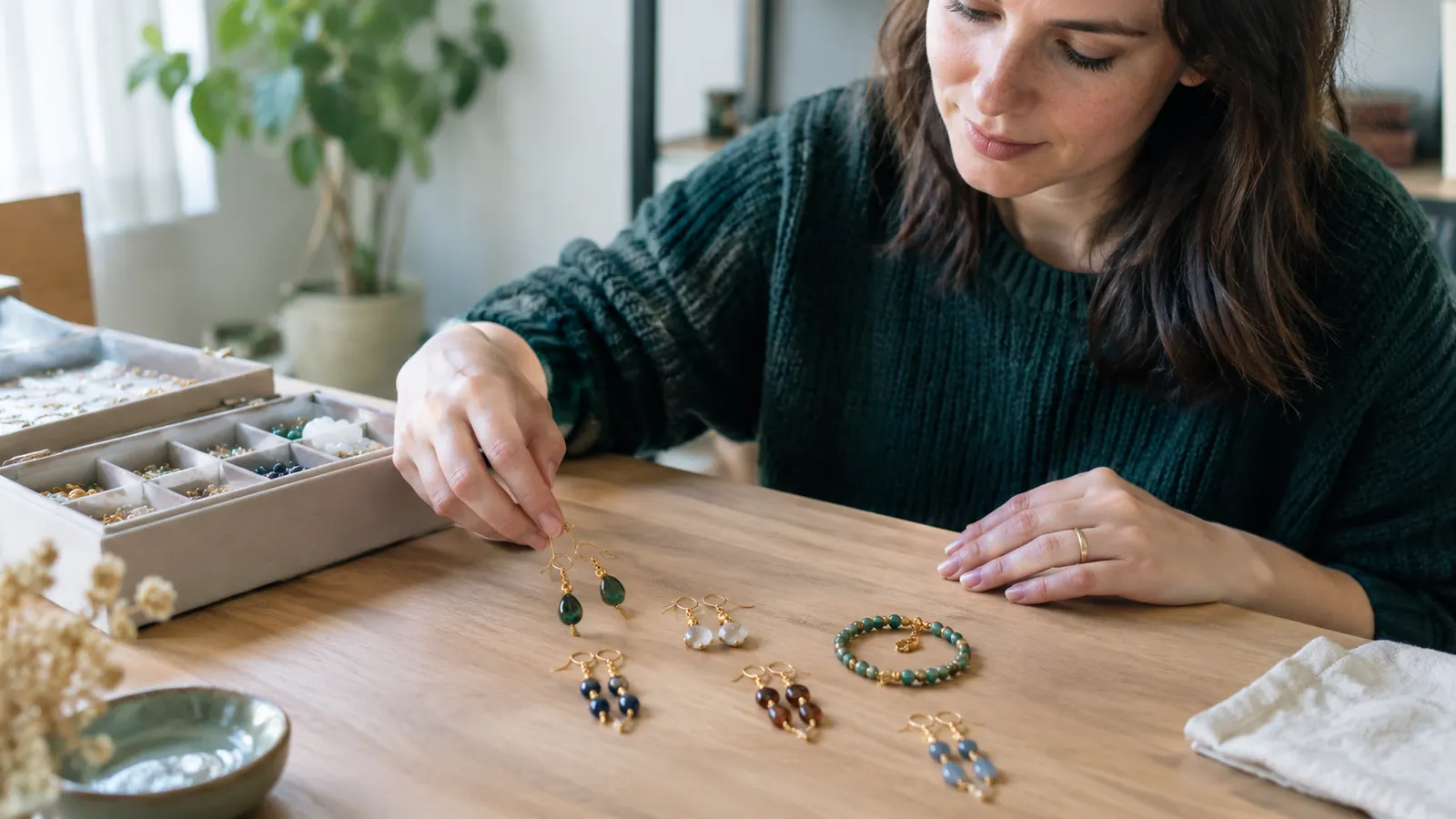
My first project was a pair of simple drop earrings. I opened a jump ring with the kit's pliers, attached a head pin with a bead, and closed it. It took me three tries to get the jump ring closed properly. On the first try I opened the ring sideways, which weakens it. On the second, I did not close it fully and the bead slid right out. On the third, I lined the ends up and pressed until they met. That is not the kit's fault. That is a skill, and the kit gives you enough findings to practice until you get it right.
My second project was a bracelet with a toggle clasp. I used six beads on each side, with a small spacer between each one, and it took me about an hour. The clasp worked. But I learned that the kit's wire is softer than the wire I have bought separately. That is actually good for a beginner. Soft wire is easier to bend and less likely to snap. It is bad if you want a stiff, structured piece. For earrings and casual bracelets, the kit's wire is fine.
The crooked chain happened on a Thursday. I was making a simple chain necklace with the tiny jump rings, and I grabbed one ring that was a size too small for the connector. It popped open under tension, the chain slid off the table, and when I put it back together I attached the clasp upside down. The chain hung with a twist that looked almost deliberate. Carol said it looked intentional, so I kept it. The lesson: the kit's jump rings come in sizes, and size matters more than I gave it credit for.
The one thing that genuinely frustrated me was the storage. The kit comes in a box with bags, but there is no tray and no compartment case. Once you open the bags, the pieces are loose. I solved this with a compartment organizer from the dollar store, and I recommend you do the same before you start. This is the one thing I would change about the kit.
The most useful lesson came from a failed attempt at a charm bracelet. I wanted to attach a small charm with a jump ring, but the charm hole was too small for the jump ring I picked. I spent ten minutes struggling, then swapped to a thinner ring and it clicked in. The kit's jump ring assortment includes thin and thick rings, and that variety is what saved me. It is the kind of thing you do not appreciate until you need it.
What I Liked
- Complete findings set: jump rings, head pins, earring hooks, clasps. You can finish projects without a supply run.
- Bead variety is broad enough for months of earrings, bracelets, and simple necklaces.
- The helping hands stand is genuinely useful for attaching clasps and holding small work.
- The shynek kit is a good value for a beginner who does not already own a stash of findings.
Where It Falls Short
- The pliers are basic. No padded handles, and the jaw joint is not smooth for long sessions.
- There is no compartment storage. The bags are fine until opened, then everything is loose.
- The wire is soft. Great for learning, wrong for stiff structured pieces.
- The 1857 count includes many findings, so if you expected only beads you will be let down.
Who This Is For
The shynek kit is for the person who wants to make earrings and simple bracelets tonight, not after a month of collecting separate supplies. It is for the beginner who does not know the difference between a head pin and an eye pin and wants to learn without buying ten different things.
It is for the hobbyist who wants a complete set of findings so projects actually get finished. It is also for the gift giver who wants to hand a box to a crafty friend and know they can start immediately. For those people, the kit is a genuinely good starting point.
It is for the person, like me, who does not mind adding one good pair of pliers and a compartment tray. The kit gives you enough to learn on, and when you outgrow it, you will know exactly which tools to buy next. I think that is the best thing I can say about any beginner kit.
Who Should Skip It
Skip the shynek kit if you already own a good set of jewelry tools and a stash of findings. You will be paying for duplicates. Skip it if you want high end beads for heirloom pieces. The beads are craft grade, not gem grade. Skip it if you hate sorting and will not buy a compartment tray. And skip it if you have significant hand pain and need ergonomic tools. The kit's pliers are fine, but they are not ergonomic, and your hands will tell you after an hour.
Also skip it if the number 1857 sounds like a guarantee of beads. It is not. It is a guarantee of pieces, and a good number of those pieces are the boring but essential findings. If that disappoints you rather than reassures you, this is not the kit for you.
And skip it if you want to make complex wire wrapped pieces or beaded loom work. This kit is a beginner's drawer, not a workshop replacement. Buy it for what it is and you will be happy. Buy it for what it is not and you will feel cheated.
If you are somewhere between a total beginner and someone who already owns a jewelry bench, my honest advice is to start with the kit and upgrade your tools as you go. That is exactly what I did. I still reach for the kit's findings and helping hands every week. I only swapped out the pliers. The kit is not a dead end. It is the first step, and a good one.
Still deciding? The shynek kit is the one I keep reaching for.
After a month of evenings at my craft table, the shynek kit is still the first thing I grab when I want to make something with my hands. Its tools are basic, its storage is on you, but the findings and the helping hands make it worth it. See today's price on Amazon and decide if it belongs on your table too.
Amazon Check Today's Price on Amazon →