I will start with the part most reviews skip: the Singer 4423 Heavy Duty is a fast, strong machine that will happily sew through things your old machine refused, and it is also a machine you have to be willing to learn. I am Paula, I am 58, I have mild arthritis in my right thumb, and I spent six weeks sewing on the Singer 4423 in my craft room in Longmont. I made curtains, I patched a pair of jeans, I sewed through four layers of denim, and I also spent one frustrating evening convinced the tension dial was broken when the real problem was that I had threaded it wrong. That is the honest version of this review. The Singer 4423 can do a lot, but it will not do the thinking for you.
The Quick Verdict
A genuinely fast, powerful machine for hobbyists who sew denim, canvas, or multiple layers, as long as you are willing to thread it carefully and practice on scraps first.
Amazon Check Today's Price →A heavy duty machine that actually sews through denim
If you are tired of your machine stalling on thick fabric, the Singer 4423 is the workhorse hobbyists talk about. Check today's price on Amazon and see if it fits your craft room.
Amazon Check Today's Price on Amazon →How I Used It
I did not run a lab test. I used the Singer 4423 the way a retired art teacher with a spare bedroom craft room actually uses a sewing machine. I made a set of linen curtains for my window, I hemmed a tablecloth, I patched a pair of my husband's jeans, and I sewed a canvas tote bag that required four layers at the handles. I also spent time just practicing on scraps, because that is the part nobody tells you about: this machine has a learning curve, and the curve is mostly about thread tension and needle choice.
The Singer 4423 is marketed as heavy duty, and that is not just a label. The metal frame and the 1.1 amp motor make it feel different from the plastic machines I have owned. It sews at 1,100 stitches per minute, which is fast, and it powered through the denim patches without stalling. But speed is also the thing you have to manage. If you are used to a gentle machine, the Singer 4423 will surprise you with how quickly it moves fabric. I learned to keep my fingers light and let the machine do the pulling.
I kept a small notebook next to the machine for the first two weeks. I wrote down which needle I used for which fabric, what tension setting worked, and which presser foot I had installed. That notebook saved me more than once. The Singer 4423 comes with a decent set of accessories, including a walking foot, a zipper foot, and a buttonhole foot, and I used all of them. The walking foot in particular made the canvas tote bag much easier, because it feeds the top layer and the bottom layer at the same rate.
The first real project was the linen curtains, and that is where I learned the machine's personality. I cut two panels, each 45 inches wide, from a midweight linen I had bought for a different project and never used. I set the stitch length to 3.5 and the tension to 4, and the first seam came out clean. Then I switched to a lighter cotton thread for the hem and the bottom stitches started looping. I stopped, rethreaded the top with the same thread I had used for the body, and the problem went away. The lesson stuck with me: on the Singer 4423, thread choice is not a small detail, it is the whole game.
What Nobody Tells You About the Singer 4423
Here is the honest part. The Singer 4423 is not a machine you can take out of the box, thread it once, and expect perfection. The tension dial is sensitive, and it changes depending on the fabric and the thread you use. I had a whole evening where the stitches looked loopy on the bottom, and I was ready to blame the machine. Then I rethreaded it carefully, following the diagram on the top of the machine, and the problem disappeared. The machine was fine. I had rushed the threading.
The second thing nobody tells you is that the Singer 4423 is loud. It is not the quietest machine I have used, and the metal frame means you hear the motor and the needle hitting the fabric. I do not mind that, because it sounds like work getting done, but if you like to sew while watching television in the same room, you will notice the difference. I keep mine on a folded towel on my craft table, which helps a little with the vibration.
The third thing is the speed. 1,100 stitches per minute is genuinely fast, and for a beginner it can feel like the machine is running away from you. The Singer 4423 does not have a speed control slider like some fancier machines. You control the speed with the foot pedal, and the pedal is sensitive. I have been sewing for years and I still had to practice slow starts on scraps before I felt comfortable. If you are brand new to sewing, this is a machine you will grow into, not one you will master on day one.
One evening in week two I wanted to sew a quick zipper pouch, and I was in a hurry because craft night was starting in an hour. I skipped the scrap test, threaded the machine with a cheap spool I had grabbed from my drawer, and set the tension where it had worked for the curtains. The first seam was a mess of loops and skipped stitches. I almost wrote the machine off. Then I slowed down, swapped in a fresh needle, and rethreaded with the same brand of thread I had used all week. The pouch sewed up in twenty minutes. The machine had not changed. My shortcuts had.
The Singer 4423 will sew through four layers of denim without flinching, but it will also remind you, loudly, that you threaded it wrong.
The Good, Honestly
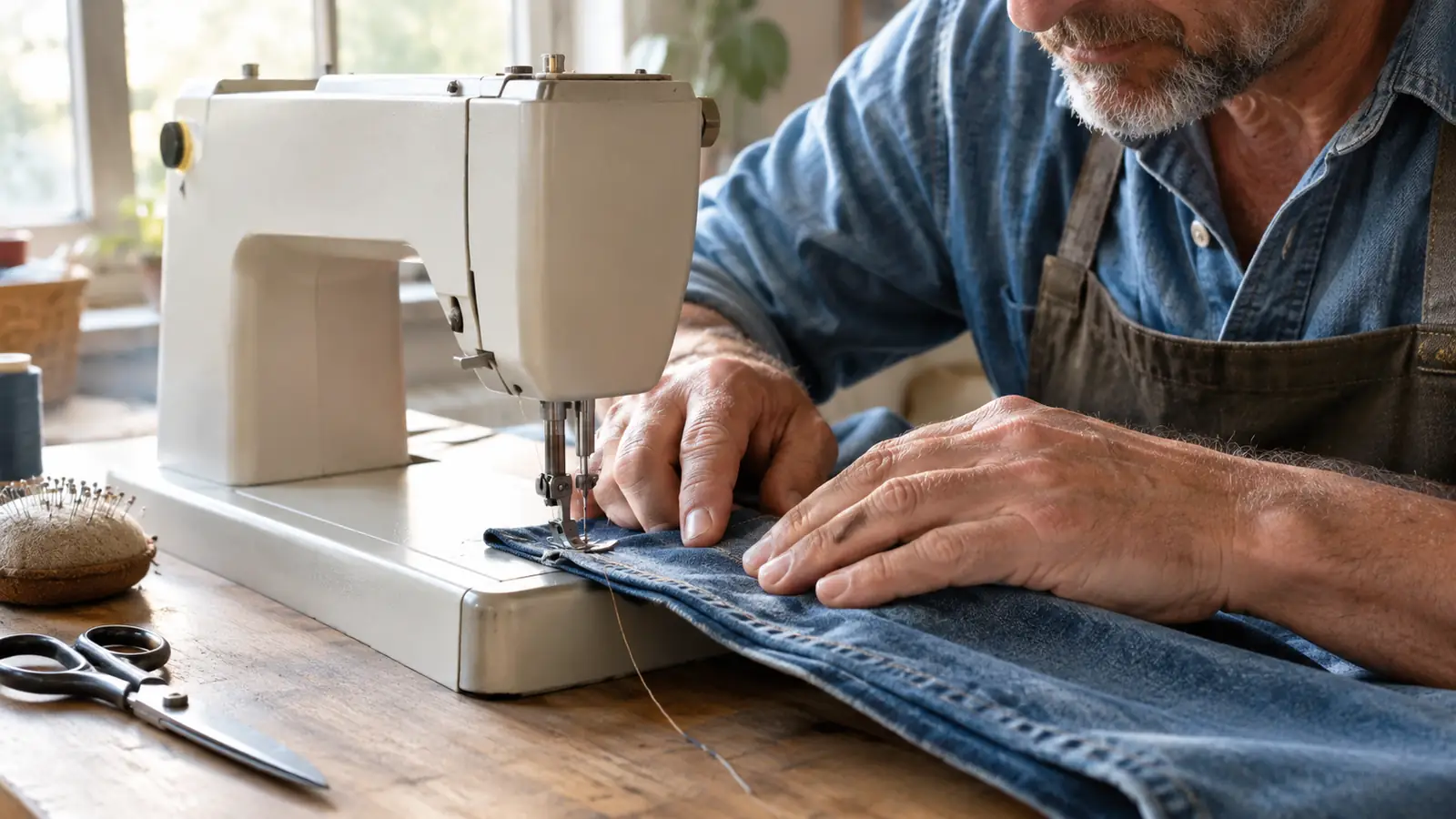
Let me give the Singer 4423 its due. The power is real. I sewed through four layers of denim at the hem of my husband's jeans, and the machine did not stall, did not skip stitches, and did not complain. My old machine would have choked on that seam. The metal frame also means the machine stays put. It does not walk across the table the way lighter machines do, which matters when you are pushing thick fabric through.
The stitch quality is good for a machine in this price range. Straight stitches were clean, and the zigzag was even. I used the buttonhole foot to make a buttonhole on a scrap of cotton, and it came out neat on the first try, which has never happened to me on any machine. The automatic needle threader works, though I will admit I still do it by hand half the time out of habit. The drop-in bobbin is easy to load, and the clear cover means you can see how much thread is left.
The Singer 4423 also comes with a surprising number of accessories for the price. You get six presser feet, including the walking foot and the zipper foot, plus bobbins, needles, a seam ripper, and a soft cover. I have paid more for machines that came with less. The accessory storage is in the front of the machine, which is convenient, though it does mean the machine is a little deeper on the table than I expected.
The canvas tote bag was the project that convinced me the power was not just a marketing claim. I cut the body from a 12 ounce canvas drop cloth and the handles from the same fabric folded double, which gave me four layers at each attachment point. I used a size 16 needle, set the tension to 5, and sewed the handles at a slow, steady pedal. The machine never hesitated. When I turned the bag right side out and checked the seams, every stitch was even. That bag has carried my library books every week since, and the handles have not pulled loose.
The Not So Good, Honestly
The tension dial is the thing I would warn every buyer about. It is not broken, and it is not badly designed. It is just sensitive, and it interacts with thread weight, needle size, and fabric thickness. I spent a full evening convinced the machine was defective, and the problem was that I had threaded the top thread incorrectly. The Singer 4423 rewards patience and punishes rushing. If you are the kind of person who wants to open the box and sew immediately, budget an hour to learn the machine first.
The second honest con is the noise. This is not a machine for a quiet library. The motor is loud, the needle is loud, and the vibration is noticeable. I put a folded towel under mine and it helped, but it is still the loudest machine I have used in recent years. If you sew in a shared space, or if you like to listen to audiobooks while you sew, you will want headphones.
The third con is the speed control. There is no slider to cap the speed, so the foot pedal is your only speed control, and it is sensitive. I have mild arthritis in my right thumb, and I found that holding the pedal at a steady slow speed for a long seam made my foot tired. That is not a defect in the machine, but it is a real consideration for anyone with similar issues. A lighter touch on the pedal comes with practice, but it is worth knowing before you buy.
The needle threader is the one feature I would call fiddly. It works, and I used it successfully on the third try, but the little hook is hard to see even with my reading glasses on. I have sewn for long enough that threading a needle by hand is second nature, so I mostly did that instead. If you have never used an automatic threader, do not let this one decide the purchase for you. It is a convenience, not a reason to buy, and not a reason to skip.
What I Liked
- Sews through four layers of denim and 12 ounce canvas without stalling
- Metal frame keeps the machine steady on the table
- 1,100 stitches per minute is genuinely fast once you learn the pedal
- Generous accessory kit with six presser feet, bobbins, needles, and a soft cover
- Drop-in bobbin with a clear cover is easy to load and monitor
- Good stitch quality for the price, including a reliable buttonhole foot
Where It Falls Short
- Sensitive tension dial that changes with thread and fabric, so you have to learn it
- Loud motor and noticeable vibration, even with a towel underneath
- No speed control slider, and the foot pedal is sensitive
- Automatic needle threader is fiddly and hard to see
- Not ideal for delicate lightweight fabrics like chiffon
- Steeper learning curve than a beginner-friendly machine

Who This Is For
The Singer 4423 is for the hobbyist who has already sewn on a basic machine and hit its limits. If you have tried to sew a denim hem and watched your machine stall, or if you have a stack of canvas and upholstery fabric that your current machine cannot handle, this is the machine that will get you through. It is also for people who do not mind learning a machine. The Singer 4423 rewards careful threading, patient tension adjustment, and a little practice on scraps before the real project.
It is a good fit for my craft room because I rotate between projects, and the Singer 4423 handles everything from lightweight cotton to heavy canvas without complaining. I made curtains, I patched jeans, I sewed a tote bag, and I did not have to switch machines. For a hobbyist who wants one machine that can do all of it, the Singer 4423 is a strong choice.
Who Should Skip It
If you are a complete beginner who has never threaded a machine, I would point you to something simpler first. The Singer 4423 is not impossible for a beginner, but the sensitive tension dial and the fast speed make it a frustrating first machine. You will learn, but you will learn while muttering under your breath. A beginner-friendly machine with a speed control slider and a simpler tension system will be less discouraging.
I would also say skip it if you only sew lightweight fabrics like chiffon or delicate silks. The Singer 4423 is a heavy duty machine, and it is happiest with medium to heavy fabrics. It will sew lightweight fabric, but you will spend a lot of time fiddling with tension and using a lighter touch on the pedal. If your projects are mostly quilting cotton and dress fabrics, a standard machine will serve you better and cost less.
And if you need a quiet machine, or if you have limited mobility in your feet, this is not the one. The noise is real, and the sensitive foot pedal requires a steady foot. None of that makes the Singer 4423 a bad machine. It just makes it a specific machine, and it is better to know that before you buy than to discover it after.
Alternatives I Considered
I compared the Singer 4423 with the Singer 4452, which is the next model up in the same heavy duty line. The 4452 adds a few features, including a speed control slider and a few more stitch options, and it costs a bit more. If the sensitive foot pedal is your main concern, the 4452 is worth the extra money. If you are happy to control speed with your foot, the 4423 gives you the same motor and the same metal frame for less.
I also thought about a mechanical machine from another brand, but I kept coming back to the Singer 4423 because of the combination of power, price, and the accessory kit. For my projects, which are mostly home sewing and repairs, the 4423 is the right balance. I do not need a computerised machine with a hundred stitches. I need a machine that will sew through denim without stalling, and the Singer 4423 does that.
Ready to sew through what your old machine could not?
The Singer 4423 Heavy Duty is the machine hobbyists turn to when they need power without a big price tag. Check today's price on Amazon and see if it belongs on your craft table.
Amazon Check Today's Price on Amazon →