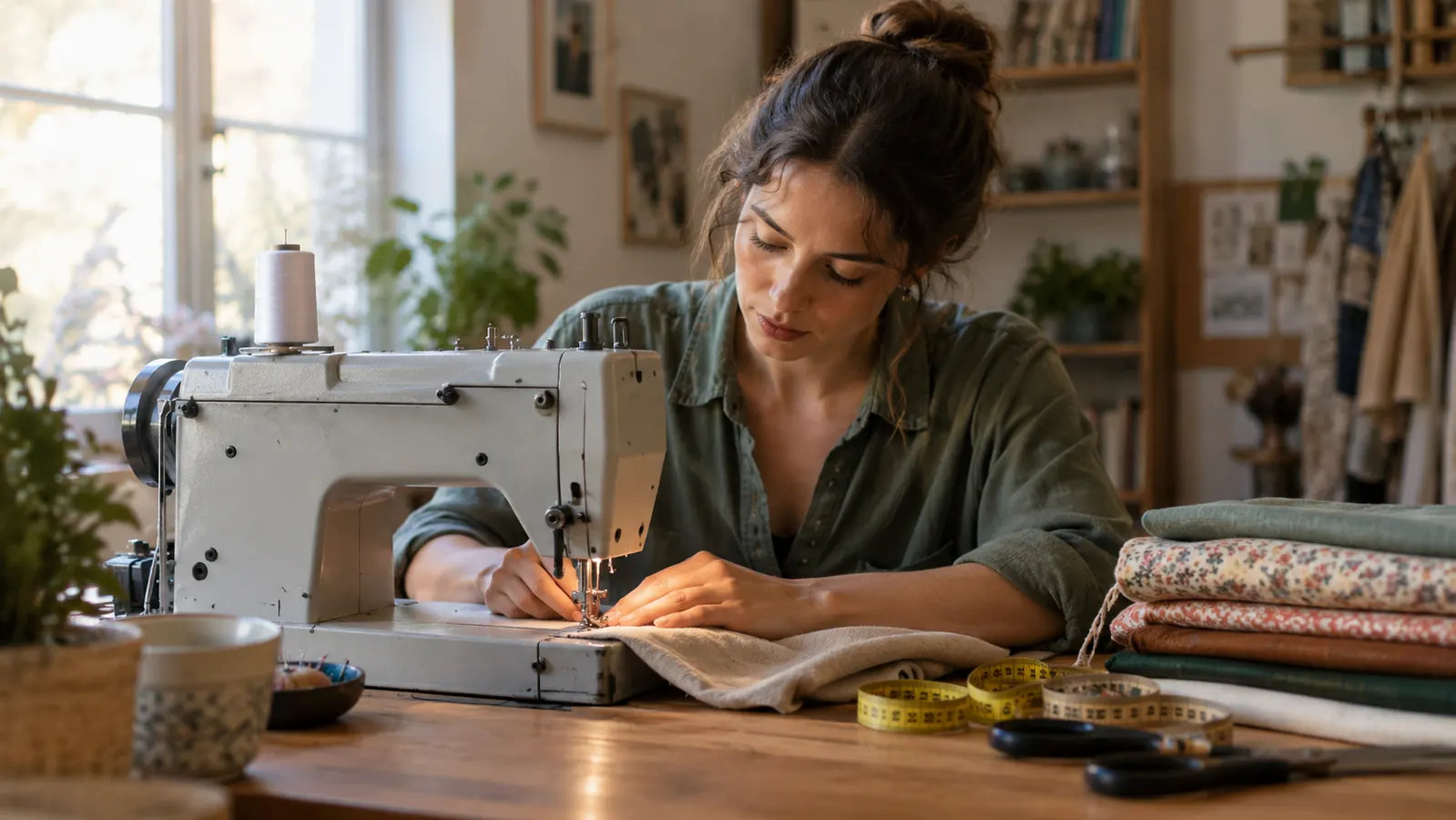
If you have been sewing for a while, you have probably noticed the same thing I did: the Singer 4423 Heavy Duty and the Singer 4452 sit side by side in every online search, and they look almost identical. Same family, same general shape, same promise of a machine that will push through denim and canvas without complaining. I spent a month with both on my craft table in Longmont, running the same seams through the same fabrics, and the honest answer is that they are closer than most comparison articles admit. But they are not the same machine, and the differences matter depending on what you actually sew.
I am Paula, and I sew for fun, not for a living. My craft room is the spare bedroom with a long folding table under the window, and my projects are the practical kind: mending jeans, hemming curtains, making tote bags, the occasional quilt square. I have mild arthritis in my right thumb, so how a machine feels matters to me as much as how fast it goes. Here is the short answer before I get into the details.
The machine I kept on my table
After a month of sewing the same seams on both, the Singer 4423 Heavy Duty is the one I reached for without thinking. Check today's price on Amazon and see if it fits your craft table.
Amazon Check Today's Price on Amazon →| Singer 4423 Heavy Duty | Singer 4452 | |
|---|---|---|
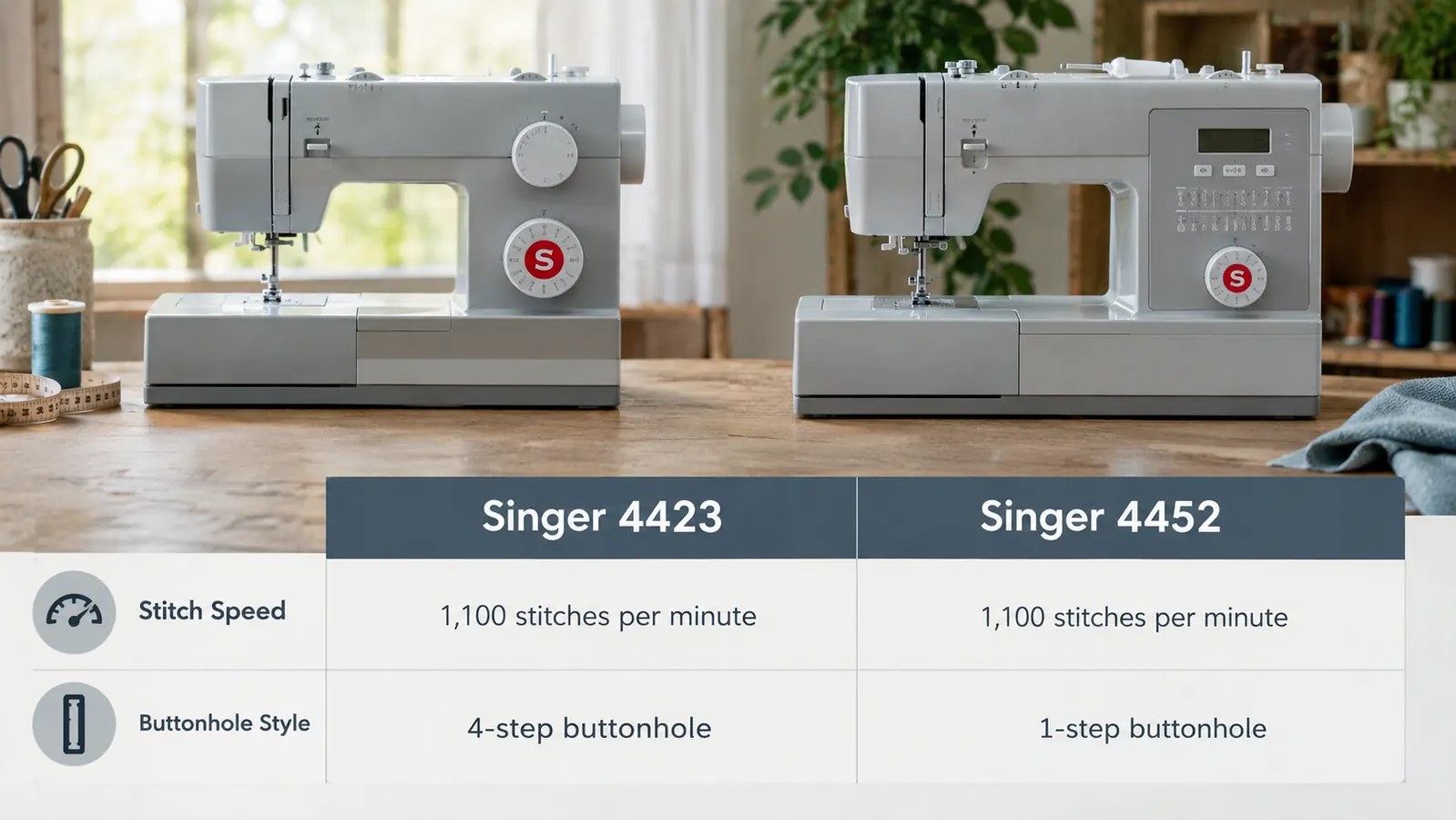
| Stitch speed | 1,100 stitches per minute, plenty for home projects | 1,100 stitches per minute, same motor class |
| Built-in stitches | 23, covers straight, zigzag, and basic stretch | 32, adds more decorative and stretch options |
| Buttonhole | One-step buttonhole, easy to learn | One-step automatic buttonhole, same ease |
| Weight | About 12.5 pounds, easier to move to the table | About 14.5 pounds, a bit more solid but heavier to lift |
| Best for | Home hobbyists who want a dependable heavy duty machine without extra features | Sewists who want more stitch variety and an automatic buttonhole |
Where the Singer 4423 Heavy Duty Wins
The Singer 4423 Heavy Duty wins on the things that matter most at a home craft table: simplicity and weight. It has 23 built-in stitches, which sounds like fewer than the 4452's 32, but I counted the stitches I actually used in a month and it was seven. Straight stitch, zigzag, a stretch stitch for knits, a blind hem, a satin stitch for applique, and a basic buttonhole. The 4423 does all of those without making me scroll through a long menu of options I will never touch. For a hobbyist, that is not a limitation, it is a relief.
The simplest example is the stitch selector. On the 4423, every stitch is on one dial, and I can see all of them at a glance. With fewer choices there is less to second guess. For a hobbyist who sews a few evenings a month, that simplicity means less time looking at the manual and more time sewing. I noticed it most on a weeknight, when I only had half an hour and wanted to finish a hem rather than learn something new.
The weight difference is also real. The 4423 comes in around 12.5 pounds, while the 4452 is closer to 14.5. That does not sound like much until you are lifting a machine off a shelf or carrying it from the closet to the folding table, which is exactly what I do every time I sew. My right thumb does not love either lift, but the 4423 is noticeably easier to manage. It also has the same heavy duty metal frame and the same 1,100 stitch per minute motor, so you are not giving up capability to get the lighter machine. You are just getting fewer features you have to store and learn.
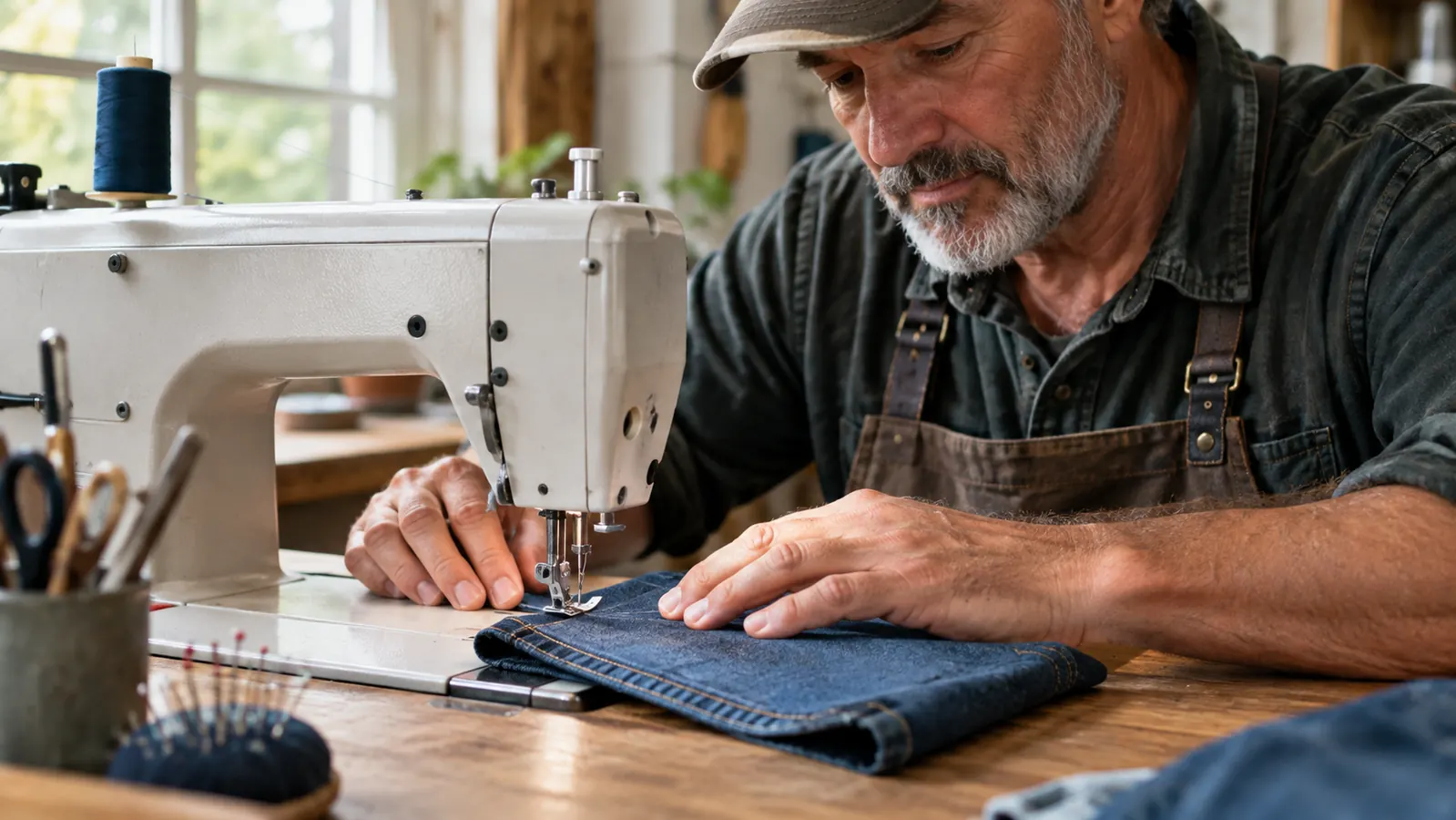
Both machines share the heavy duty basics: a sturdy internal metal frame, a stainless steel bedplate that lets fabric glide, a strong motor, and a top speed of up to 1,100 stitches per minute. On the seams I tested, the two machines punched through thick fabric equally well. So the decision does not come down to power. It comes down to whether you will use what the 4452 adds on top.
Where the Singer 4452 Wins
I will be fair to the Singer 4452, because it wins the feature comparison in a straightforward way. It has 32 built-in stitches, which means more decorative stitches for anyone who likes to add a scalloped edge or a leaf motif to a project. It also has an automatic needle threader, which the 4423 does not have. That is a genuine convenience if your eyes are not what they used to be, and I say that as someone who has spent far too long squinting at a needle eye. The 4452 also includes a few extra accessories in the box, which is a small thing but a nice one.
The 4452 has 32 built-in stitches compared with 23 on the 4423, and it comes with more accessories in the box, including extra presser feet that otherwise cost extra. If you know you want to try quilting on a home machine, a walking foot in particular is a real help with thick layers, because it feeds the top layer at the same rate as the bottom one. Neither machine has a large throat space, so neither is a true quilting machine, but the 4452 will take you further down that road.
The 4452 is the better machine if you know you will use those extra stitches. If you make a lot of decorative pillowcases, if you like to embroider with a satin stitch, or if you simply enjoy having options even when you do not use them, the 4452 gives you more room to grow. It is also a slightly heavier machine, which some people read as more solid. I did not find the 4423 flimsy in any way, but I understand why a heavier base feels reassuring to some sewists.
Still deciding? Start with the 4423
The Singer 4423 Heavy Duty is the machine I kept on my table. It does the heavy work, it is easier to lift, and it costs less. See today's price on Amazon.
Amazon Check Today's Price on Amazon →Who Should Buy Which
Buy the Singer 4423 Heavy Duty if you are a home hobbyist who wants a dependable machine for mending, quilting, and the occasional bag or curtain. You want something that will sew through denim and canvas without complaining, you do not want to scroll through 32 stitches to find the one you need, and you would rather save the money and the shelf space. This is the machine I would recommend to a friend who is just getting back into sewing after years away, because it does everything a hobbyist actually needs and nothing that gets in the way.
Buy the Singer 4452 if you already know you want the extra stitches and the automatic needle threader. If you make a lot of decorative items, if you like having a wide stitch library to play with, or if you have trouble threading needles and want that convenience built in, the 4452 is worth the extra cost. It is still a heavy duty machine with the same strong motor, so you are not giving up capability. You are just paying for features that you will actually use.
The 4423 does all of the heavy work without making me scroll through a long menu of options I will never touch. For a hobbyist, that is not a limitation, it is a relief.
What I Learned Sewing on Both for a Month
I ran the same test on both machines: four layers of denim, a folded canvas tote, a stretchy knit hem, and a basic cotton quilt square. Both machines handled the denim and canvas without stalling, which is the main reason anyone looks at the Singer heavy duty line in the first place. The stitch quality was essentially identical on straight seams. The differences showed up in the details, like how easy it was to find the stitch I wanted and how much effort it took to move the machine around.
Then I sewed a set of four cushion covers on each machine, with a zipper and a decorative edge stitch on each. The zipper foot behaved the same on both. The decorative stitches on the 4452 gave me a few more choices, and two of them looked lovely along the cushion edges. But on the 4423 I picked one stitch and moved on. Both sets of cushions came out well, and I could not tell you from across the room which machine made which.
The Singer 4423 Heavy Duty has a one-step buttonhole, and the Singer 4452 has a one-step automatic buttonhole. In practice, I could not tell the difference between the two results. Both made a clean buttonhole on a cotton scrap. The 4452's automatic needle threader was the one feature I genuinely missed when I switched back to the 4423, but it was not enough to make me want the heavier machine on my table every day.
A Note on the Singer Brand and Support
Both machines carry the Singer name, and that matters for a practical reason: parts and accessories are easy to find. Singer has been making sewing machines for a very long time, and the heavy duty line uses standard bobbins and standard feet. I did not have to hunt for a walking foot or a zipper foot, which is more than I can say for some machines I have owned. If you are a hobbyist, that ease of finding accessories is worth more than an extra stitch pattern.
One honest note: neither machine is silent. They are both mechanical workhorses, and you will hear them working. That is normal for this class of machine, and I actually like the sound because it feels like something is happening. But if you are sewing late at night in a small apartment, you will hear it, and so will your neighbors.
Both machines also need the same care. Clean the bobbin area every few projects, brush the lint from the feed dogs, and change the needle often. Neither one needs special tools to maintain, and the manuals for both are clear. I would not let maintenance push you toward either machine.
The Bottom Line
The Singer 4423 Heavy Duty and the Singer 4452 are both good machines, and you would not be making a mistake with either one. The 4423 is the better fit for most home hobbyists because it is lighter, simpler, and does the same heavy fabric work. The 4452 is the better fit if you specifically want the extra stitches and the automatic needle threader. For my craft table, with my projects and my hands, the Singer 4423 Heavy Duty is the one I kept.
If you are still undecided, try this test. Write down the last five things you sewed and the next five you plan to sew. If every one of them uses a straight stitch, a zigzag, a hem or a buttonhole, the Singer 4423 Heavy Duty covers you completely. If two or three of them involve quilting or decorative edges, the 4452 is worth the step up. That list will tell you more than any spec sheet.
The Singer 4423 Heavy Duty is ready for your next project
If you want a heavy duty machine that does not overcomplicate your craft table, this is the one. Check today's price on Amazon and see if it is the right fit for you.
Amazon Check Today's Price on Amazon →