I have a confession. I bought the Singer 4423 Heavy Duty mostly because the price was right and the metal frame felt solid in the store. That is not a great way to choose a sewing machine, and I knew it. But after months of using it at my folding table for mending, tote bags, zippered pouches, and one very stubborn denim repair, I can tell you exactly what this machine does well, what it does not do, and who should buy it. If you are a hobbyist who sews a few evenings a week, this Singer is probably on your short list. Here is what months of real use taught me.
The Quick Verdict
The Singer 4423 Heavy Duty is a fast, tough, no-nonsense machine for hobbyists who sew frequently and want a workhorse that will not fight them. It is not a quiet machine, and its basic stitch selection will not satisfy someone who wants decorative options, but for straight stitching, mending, and bags, it has been the most dependable machine I have owned.
Amazon Check Today's Price →A workhorse for the craft table, without the craft-store markup
After months of daily and weekly use, the Singer 4423 Heavy Duty is the machine I reach for first. If you sew bags, mending, or home projects and you want a machine that just gets out of the way, check today's price on Amazon and see if it fits your table.
Amazon Check Today's Price on Amazon →How I've Used It
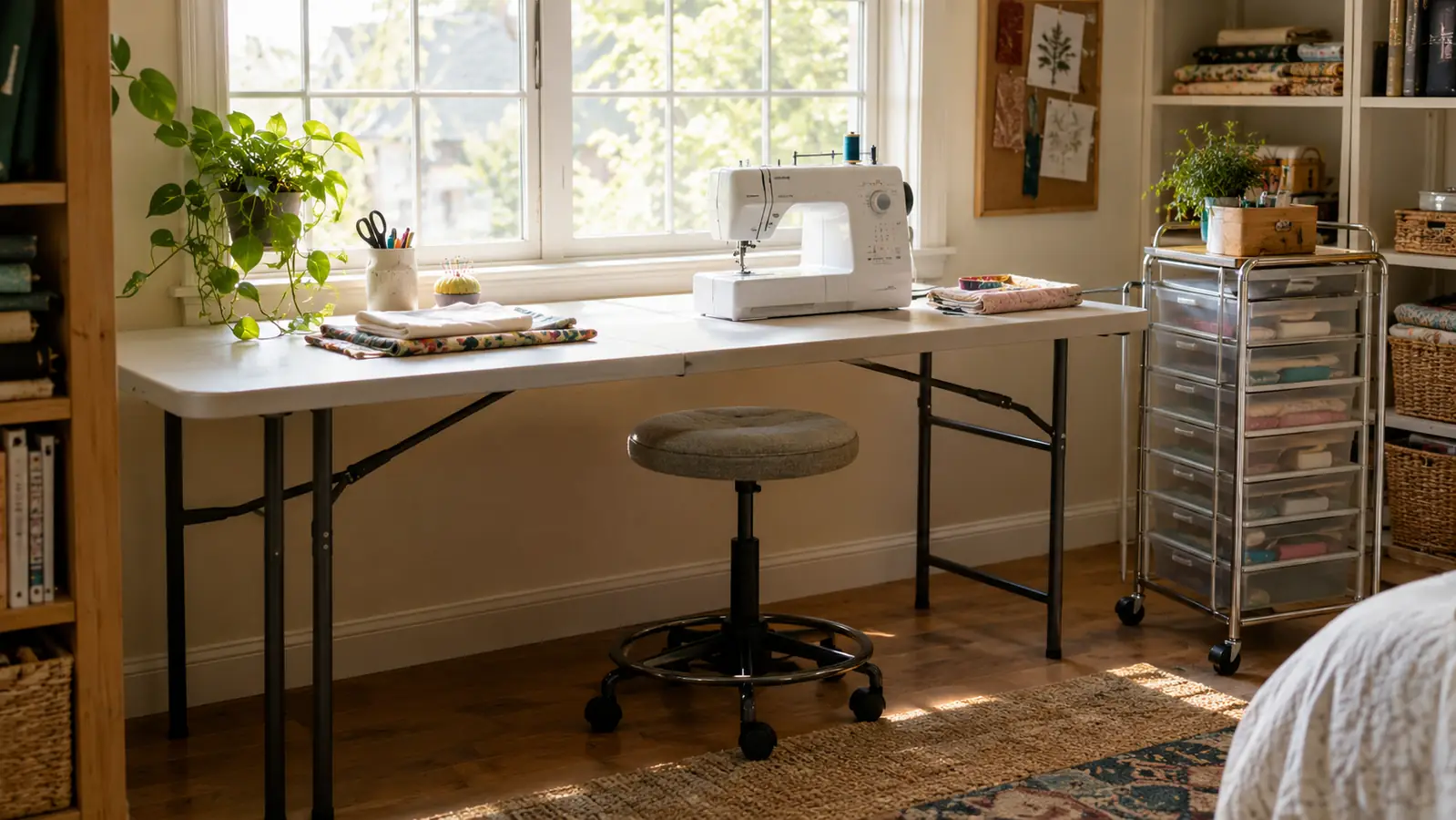
I am Paula, and my craft room is the spare bedroom in my house in Longmont, Colorado. I retired from teaching middle school art a few years ago, and I rotate between card making, scrapbooking, a little sewing, and painting. My sewing corner is a long folding table under the window, with a rolling cart of drawers beside it. That is where the Singer 4423 has lived since I unboxed it on a Tuesday morning in early March, and it has not moved since.
In the first month, I used it for the usual things: hemming curtains, mending a torn seam on a canvas tote, and making a few simple pillowcases. By month two, I was sewing zippered pouches and a lined tote bag with interfacing, which means the machine had to handle multiple layers of cotton canvas and a zipper foot without complaint. By month four, I had repaired a pair of my husband's work jeans with a denim patch, which is the kind of job that exposes a weak machine fast. The Singer 4423 handled all of it. I have also used it for light craft projects like bunting and fabric gift bags, and it sews those quickly enough that I can finish a set of four in one evening.
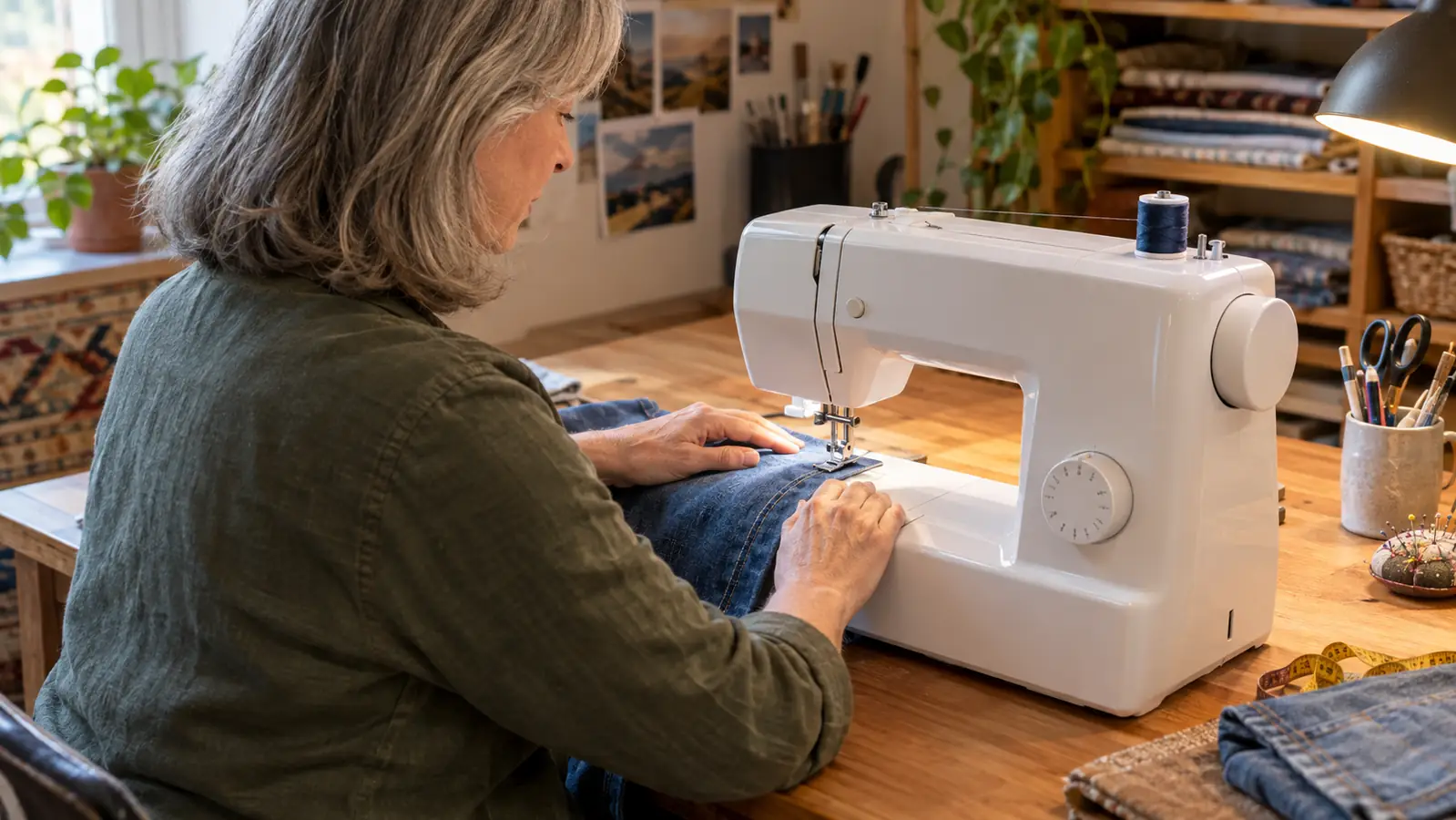
By the second month I was ready to test the heavy duty claim properly. I hemmed a pair of work jeans at the side seam, where the fabric folds over itself into six or seven layers. I switched to a size 16 denim needle, lengthened the stitch, and turned the handwheel by hand over the thickest part. The SINGER 4423 walked over the seam without skipping a stitch. My old machine would have stalled there and left a knot of thread underneath.
I have mild arthritis in my right thumb, so how a machine feels matters to me as much as how it sews. The Singer 4423 has a sturdy metal frame and enough weight that it does not vibrate across the table at speed. The controls are simple and within reach, and the needle threader is one I can actually use without putting on my reading glasses. Those are the small things that keep me coming back to it.
The controls on the SINGER 4423 are dials rather than buttons, and that suits my hands. The stitch selector turns with a firm click, so I always know where I have landed, and the stitch length and width dials are big enough to grip without pinching. The top drop-in bobbin is another quiet kindness. I can see how much thread is left through the clear cover, and I never have to fish a bobbin case out from underneath the bed.
What the Heavy Duty Name Actually Means
The Singer 4423 is called Heavy Duty for a reason. It has a stainless steel bedplate, a metal frame, and a motor that is noticeably stronger than the one in the basic plastic-bodied machines I have owned before. That combination matters most when you sew through thick layers. I have taken it through four layers of denim at the hem of a pair of jeans, and it did not stall or skip stitches the way my old machine did on two layers of canvas.
The 23 built-in stitches are not a huge number by modern standards, but they cover what a hobbyist actually needs: straight stitch, zigzag, a few stretch stitches, and a buttonhole stitch that I have used more than I expected. The four-step buttonhole is not automatic, which means you set the length and sew each side of the buttonhole yourself. It takes a little practice, but it is reliable once you get the rhythm. I have made buttonholes on three different projects and every one came out usable.
In practice I use five of them. Straight stitch for almost everything, zigzag for finishing raw edges, the stretch stitch for knits, the blind hem for trousers and skirts, and the one-step buttonhole for the occasional shirt or cushion cover. The buttonhole is worth a word. You put the button in the foot, lower the lever, and the machine sizes the buttonhole to match. My first try came out slightly off center because I forgot to lower the lever, and every one since has been neat.
One thing I want to be honest about: this is not a quiet machine. At full speed it has a steady, mechanical hum that you can hear across the room. It does not bother me, and I actually find the sound reassuring because it tells me the motor is working, but if you sew late at night in an apartment, you will notice it. The speed control is a simple foot pedal, and the machine sews fast. I measured my own pace on a straight seam and I can finish a 12-inch seam in well under a minute without pushing it. That speed is wonderful for long runs of straight stitching and less ideal for delicate curves, where I have to slow down and take my time.
How It Performed Over Months of Use
The most important thing I can tell you about the Singer 4423 is that it has not changed. After months of use, the stitches are still even, the tension has not drifted, and the machine has never needed a repair. I have had machines that started skipping stitches after a few weeks, and I have had machines that needed their timing adjusted just from normal use. This one has been steady from the first seam to the most recent one.
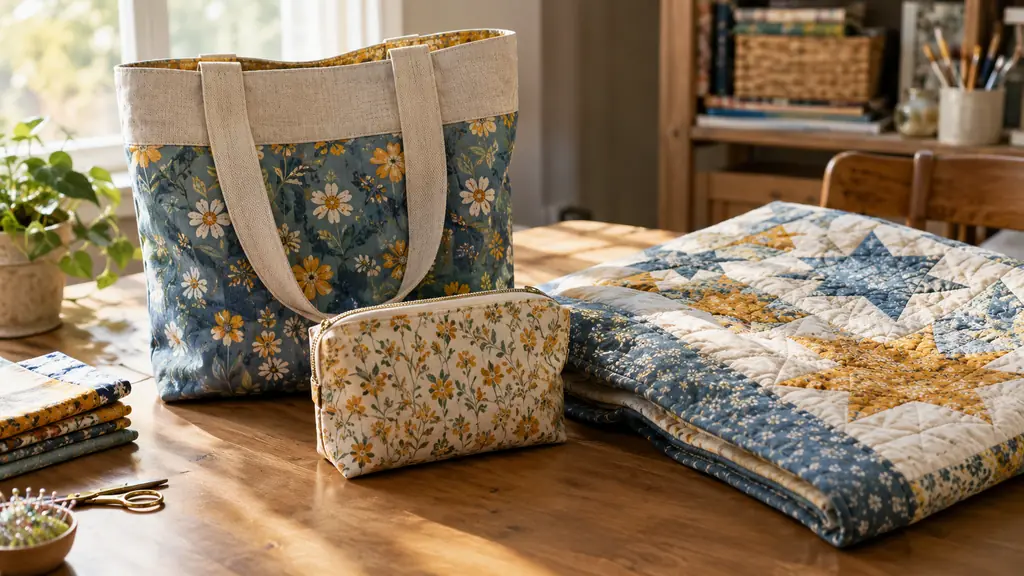
I keep a small notebook in my craft room, and I wrote down every project I finished on this machine. The list includes 14 tote bags, 9 zippered pouches, 6 pillowcases, 3 sets of fabric gift bags, 2 pairs of mended jeans, 1 quilted table runner, and a handful of smaller repairs. That is a lot of work for a machine in this price range, and it has done all of it without a single jam that I could not clear in under a minute.
The one maintenance task I have done is cleaning the bobbin area after every few projects. The Singer 4423 comes with a small brush and a screwdriver for the needle plate, and the bobbin case is easy to remove and put back. I also change the needle regularly, which I learned the hard way after a dull needle started snagging a lightweight cotton. That was my mistake, not the machine's, and it was an easy fix once I realized what was happening.
Every few months I also take off the needle plate and brush out the feed dogs, where lint packs in tighter than you would expect. The manual shows where to put a drop of sewing machine oil, and I do that at the same time. It is a fifteen minute job, and the machine runs noticeably smoother afterward. I also change the needle after every big project, which prevents most of the skipped stitches people blame on the machine.
After months of use, the stitches are still even, the tension has not drifted, and the machine has never needed a repair. That is the kind of dependability a hobbyist actually needs.
What It Does Not Do Well
I want to be fair, because every review should have a real list of cons. The Singer 4423 is not the machine for someone who wants a wide variety of decorative stitches. The 23 stitches are practical, not fancy. If you want scalloped edges, multiple satin stitch options, or a large library of embroidery-style stitches, you will be disappointed. This machine is built for utility, and it is honest about that.
The other thing I noticed is that the automatic needle threader, while helpful, is a little finicky. It works most of the time, but I have had to try it twice on a few occasions, especially with a thicker thread. It is still easier than threading a needle by hand, and I would rather have it than not, but it is not the smoothest needle threader I have used.
The bobbin winder is the other small thing I would change. It works, but you have to watch it, because it does not always stop cleanly when the bobbin is full. I stand beside it for the minute it takes rather than walking away. It is a small habit, and once you know it, it is no trouble at all.
The accessories that come in the box are basic. You get the standard presser feet, bobbins, needles, and a seam ripper, which is enough to get started, but I bought a walking foot and a zipper foot separately for the projects I like to make. That is not a criticism of the machine itself, just a note that you will probably want a few extra feet once you start sewing bags and pouches.
What I Liked
- Metal frame and stainless steel bedplate feel solid and hold up to daily use
- Fast straight stitching that sails through denim, canvas, and multiple layers
- Simple controls that are easy to use even with arthritic hands
- Dependable tension that has not drifted in months of use
- Easy to clean and maintain at home
Where It Falls Short
- Loud at full speed compared to newer computerized machines
- Only 23 stitches, all practical, none decorative
- Automatic needle threader works most of the time but can be finicky
- Basic accessories in the box, so you will likely buy extra feet
Who This Is For
The Singer 4423 Heavy Duty is for the hobbyist who sews often enough that a flimsy machine is a real frustration. If you make tote bags, mend jeans, sew curtains, or work with canvas and denim, this machine will handle it without complaint. It is also a great choice for someone who wants a mechanical machine they can maintain themselves, without a screen, without a dozen menus, and without a repair bill for something that should be a simple fix.
It is especially good for beginners who are serious about learning. The Singer 4423 is forgiving, the manual is clear, and the machine does not have enough features to overwhelm you. You can learn to sew on this machine and keep using it for years, which is exactly what I have done. If you are the kind of person who would rather fix a jam yourself than wait for a service appointment, this machine is for you.
It is also a good fit for the person who mends. A lot of my use is not projects at all. It is hems, torn pockets, a bag strap that came loose, and a tear along the seam of a canvas tote. The SINGER 4423 handles all of those without fuss, and a mending pile that used to sit for weeks now gets cleared in one afternoon at the folding table.
Who Should Skip It
If you want a machine for quilting with a large throat space, the Singer 4423 will feel cramped. The space to the right of the needle is fine for mending and bags, but a big quilt will be a struggle. If you want a wide variety of decorative stitches, or if you want a quiet machine for late-night sewing in a shared space, this is not the one.
I would also say that if you sew only a few times a year, a simpler and lighter machine might serve you just as well. The Singer 4423 is a workhorse, and a workhorse is only worth it if you actually put it to work. For me, it earns its place on the table every week. For someone who mends a button and calls it a year, it is more machine than you need.
Months later, I still reach for this machine first
The Singer 4423 Heavy Duty has earned its spot on my craft table. If you want a dependable workhorse for bags, mending, and home projects, check today's price on Amazon and see if it is the right fit for your sewing corner.
Amazon Check Today's Price on Amazon →